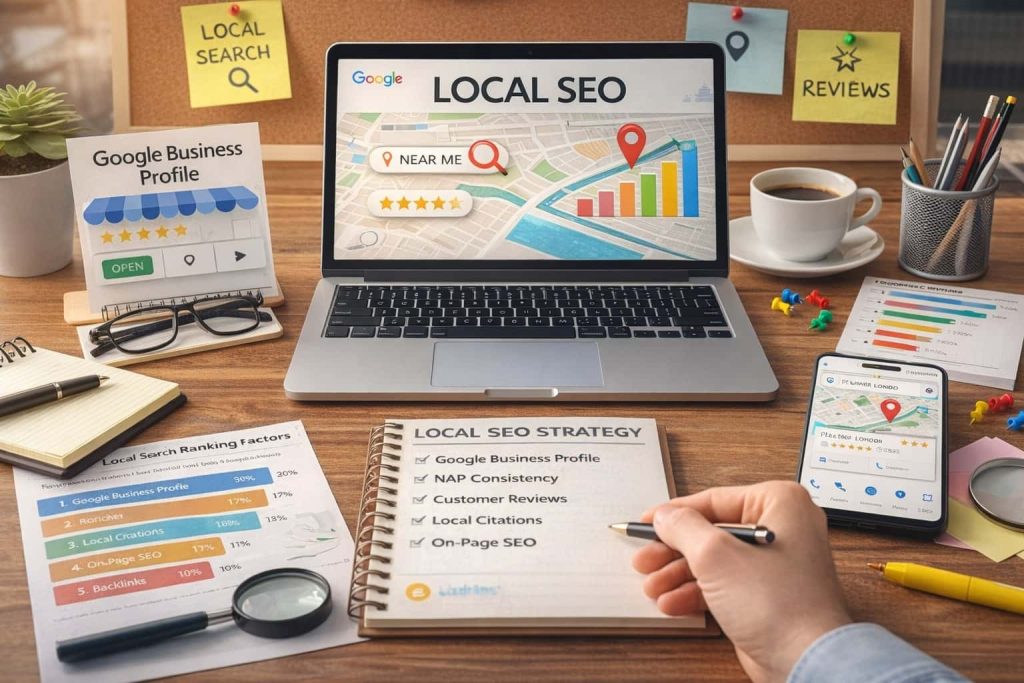

SEO Marketing for Small Business: Complete Guide to Grow Your Business Online

SEO Marketing for Small Business: Complete Guide to Grow Your Business Online

If you are running a small business or startup, you are competing with brands that often have bigger budgets, larger teams, and stronger brand recognition. The good news? In Google search results, smart strategy often beats big budget.

Over 90% of online experiences begin with a search engine. More than 68% of clicks go to organic results, not paid ads. That means SEO marketing for small business is not just a technical upgrade — it is a growth channel.

When done correctly, small business search engine optimization helps you:

  • Attract customers who are already searching for your services
  • Compete locally without massive advertising spend
  • Build long-term traffic instead of paying per click forever

This complete guide explains how SEO marketing works for small companies, what it costs, what strategies actually deliver ROI, and how to decide whether to do it yourself or hire experts.

What Is SEO Marketing for Small Business?

What Is SEO Marketing for Small Business?

SEO marketing for small business is the process of improving your website and online presence so potential customers can easily find your business when they search on Google or other search engines.

In simple terms, it means positioning your business exactly where customers are already looking.

Today, most buying journeys start with a search query. Someone needs a service, a product, or a solution — and their first step is to type a question into Google. If your business appears in those results, you gain visibility, trust, and potential customers. If it doesn’t, your competitors get the opportunity instead.

For small businesses, SEO is not just about ranking higher in search results. It is about creating a sustainable digital presence that continuously attracts qualified traffic. When implemented correctly, SEO becomes a long-term marketing asset that generates leads, builds brand credibility, and reduces dependency on paid advertising.

Unlike traditional marketing channels that rely on interruption (such as ads or cold outreach), SEO focuses on intent-driven marketing. You are reaching people who are actively searching for what you offer.

How SEO for Small Businesses Differs From Enterprise SEO

How SEO for Small Businesses Differs From Enterprise SEO

SEO strategies for small businesses are fundamentally different from those used by large corporations or enterprise-level websites.

Large companies often compete for highly competitive, national or global keywords. They typically have dedicated content teams, large marketing budgets, and extensive backlink networks that allow them to dominate broad search terms.

Small businesses, however, operate under different conditions — and that is actually an advantage when the strategy is executed correctly.

Instead of competing directly with major brands, successful small business SEO focuses on highly targeted opportunities where competition is lower but purchase intent is stronger.

A well-designed SEO strategy for small businesses usually prioritizes the following areas:

Niche targeting
Rather than trying to rank for extremely competitive keywords, small businesses focus on specialized topics or services where they can establish authority faster.

Local visibility
For many small companies, the most valuable traffic comes from nearby customers. Optimizing for local search results helps businesses appear when users search for services within a specific geographic area.

Commercial intent keywords
Not all traffic is equally valuable. Small business SEO focuses on keywords that signal strong purchase intent, such as service-related queries or solution-focused searches.

Conversion optimization
Traffic alone does not grow a business. Effective SEO ensures that visitors arriving from search engines are guided toward meaningful actions such as contacting the business, requesting a quote, or making a purchase.

When these elements work together, even a relatively small website can compete effectively against much larger competitors.

Why Small Businesses Need SEO

Why Small Businesses Need SEO

For many small businesses, growth depends on a steady and predictable flow of new customers. In the past, referrals and word-of-mouth marketing were often enough to sustain that flow.

Today, consumer behavior has changed dramatically.

Before choosing a service provider, most people conduct online research. They compare options, read reviews, and evaluate credibility long before they make contact with a business.

This shift means that visibility in search results has become one of the most important factors influencing customer acquisition.

Imagine someone searching for:

  • “accountant near me”
  • “best web design for startups”
  • “local digital marketing agency”

If your business does not appear in those results, you effectively do not exist in that moment of decision. The customer will simply choose one of the competitors they see.

SEO solves this visibility problem by positioning your business directly in front of potential customers at the exact moment they are looking for a solution.

Even more importantly, SEO allows smaller companies to compete intelligently rather than simply competing on budget. By targeting specific long-tail searches and localized queries, a small business can often outrank older or larger competitors who are not optimizing their websites effectively.

In other words, SEO levels the playing field.

SEO vs Paid Ads for Small Business

Many small business owners wonder whether they should invest in SEO or rely on paid advertising.

Both channels can generate traffic, but they work very differently.

Paid advertising platforms such as Google Ads can deliver immediate visibility. Once a campaign is launched, your website can begin receiving traffic almost instantly. However, that visibility only lasts as long as the advertising budget continues.

The moment ad spending stops, the traffic disappears.

SEO operates on a different principle. Instead of paying for each visitor, you invest in building a website that search engines recognize as relevant and trustworthy. Over time, this leads to organic rankings that can generate traffic consistently without ongoing cost per click.

For small businesses with limited marketing budgets, this difference can be significant.

While SEO typically takes longer to produce results, it often delivers stronger long-term returns because the traffic continues even after the initial optimization work has been completed.

In practice, the most effective strategy usually combines both approaches.

Paid ads can be used to test keyword performance, validate demand, and generate short-term leads. Meanwhile, SEO builds a sustainable foundation that attracts organic traffic and reduces long-term marketing costs.

Businesses that balance these two channels effectively often create the most stable and scalable growth.

Benefits of SEO for Small Businesses

Benefits of SEO for Small Businesses

For small businesses, SEO is more than just a marketing tactic. It is one of the few channels that can consistently generate qualified leads without requiring constant advertising spend. When implemented strategically, SEO strengthens visibility, builds credibility, and attracts customers who are already searching for what you offer.

Unlike short-term marketing campaigns that stop delivering results once the budget ends, SEO compounds over time. Each optimized page, helpful piece of content, and authoritative backlink strengthens your online presence and increases the likelihood that potential customers will discover your business through search.

Below are some of the most important benefits SEO provides for small businesses.

Increased Visibility in Google

One of the most immediate advantages of SEO is increased visibility in search results.

When your website appears on the first page of Google, especially within the top positions, your brand gains significantly more exposure. Research consistently shows that the majority of users rarely move beyond the first page of results. This means businesses that rank higher naturally receive the majority of search traffic.

However, the impact of visibility goes beyond simple clicks.

Repeated exposure in search results gradually builds familiarity and trust. Even if a user does not click on your website during their first search, seeing your brand multiple times can create recognition. When that user is ready to make a decision, they are far more likely to choose a business they have already seen in the results.

For small businesses competing with established brands, this visibility can dramatically improve brand awareness and credibility.

Highly Targeted Traffic

Not all website traffic has the same value.

One of the strongest advantages of SEO is that it attracts intent-driven visitors — people who are actively searching for a solution, product, or service. These users are not passively browsing content; they already have a need and are looking for the best option available.

For example:

  • Someone searching “how to do SEO for small business” is likely researching and learning about SEO strategies.
  • Someone searching “small business SEO services London” is much closer to making a purchasing decision.

This difference in intent is critical. Traffic generated through search engines tends to convert at a much higher rate because it aligns directly with the user’s immediate goal.

Compared to many forms of social media traffic, which can often be passive or exploratory, search traffic is typically more focused and more likely to lead to meaningful actions such as inquiries, bookings, or purchases.

Long-Term Cost Effectiveness

Another major advantage of SEO is its cost efficiency over time.

Traditional advertising channels often operate on a pay-per-impression or pay-per-click model. While these campaigns can produce quick results, they require continuous spending to maintain visibility. Once the advertising budget stops, so does the traffic.

SEO works differently.

Instead of paying for each visitor, businesses invest in creating long-term digital assets. These include optimized website pages, high-quality content, technical improvements, and authority signals such as backlinks.

Once these assets begin ranking in search engines, they can generate traffic for months or even years without additional advertising costs.

For many small businesses with limited marketing budgets, this makes SEO one of the most sustainable marketing investments available.

Stronger Local Brand Authority

For businesses that serve specific geographic areas, local SEO plays a critical role in building credibility and attracting nearby customers.

When your business appears in local search results — particularly in Google Maps and local listings — it sends a strong signal of legitimacy. Users tend to trust businesses that appear prominently in both organic results and local map listings.

This visibility also reinforces your reputation within the local market. When potential customers repeatedly see your business in local searches, reviews, and listings, your brand gradually becomes associated with authority and reliability within that area.

For service-based businesses such as consultants, agencies, contractors, and local service providers, this local authority can become a powerful competitive advantage.

Over time, a well-optimized local SEO presence can transform a small business into one of the most recognized and trusted options within its market.

Key SEO Strategies for Small Businesses

Key SEO Strategies for Small Businesses

A successful SEO strategy for small businesses does not rely on hundreds of complicated tactics. Instead, it focuses on a few high-impact actions that consistently drive visibility, qualified traffic, and conversions.

Small companies rarely have the resources to compete with enterprise websites at scale. The goal is not to publish the most content or build the largest site — it is to target the right opportunities where search intent and business value align.

The foundation of this strategy always begins with keyword research.

Keyword Research Basics

Effective SEO starts with understanding how your potential customers search online. Many businesses make the mistake of optimizing their websites around internal terminology instead of the phrases real customers use.

Keyword research helps bridge that gap.

By analyzing search queries, you can identify the exact words and phrases people type into Google when they are looking for services, solutions, or products related to your business. These insights allow you to structure your content around real demand instead of assumptions.

Several tools can help uncover these search patterns:

Google Keyword Planner
This tool provides keyword ideas, search volume estimates, and competitive insights directly from Google’s advertising data. It is useful for identifying high-level search demand.

Google Search Console
Search Console reveals the queries that already drive impressions and clicks to your website. This data is extremely valuable because it shows how Google currently interprets your content.

Ahrefs or SEMrush
Professional SEO platforms provide deeper insights into keyword difficulty, search intent, competitor rankings, and backlink data.

Google Autocomplete and “People Also Ask”
Even simple Google search suggestions can reveal real user questions and emerging long-tail queries that tools sometimes overlook.

Focus on Long-Tail Commercial Keywords

For small businesses, the most valuable keywords are rarely the broad, high-volume terms.

Instead, the best opportunities often come from long-tail keywords — longer and more specific search phrases that reveal clear user intent.

Examples include:

  • affordable SEO for small business

  • SEO strategy for small business

  • digital marketing SEO for small business

  • local SEO services for startups

  • best SEO tools for small business owners

Although these keywords may have lower individual search volume, they often bring visitors who are much closer to making a decision.

In addition, long-tail queries typically have lower competition, making them easier for smaller websites to rank for. When multiple long-tail pages begin ranking, the combined traffic can often exceed that of a single high-volume keyword.

Over time, this approach allows small businesses to build topical authority around their niche while gradually expanding their organic search visibility.

Align Keywords With Search Intent

Another critical factor in keyword research is understanding search intent.

Not every search indicates the same stage in the buyer journey. Some users are researching information, while others are ready to purchase or hire a service provider.

In general, search queries fall into three main categories:

Informational intent
Users are learning about a topic or exploring solutions.
Example: “how to do SEO for small business.”

Commercial investigation
Users are comparing options and evaluating providers.
Example: “best SEO services for small businesses.”

Transactional intent
Users are ready to take action or purchase.
Example: “small business SEO agency London.”

A strong SEO strategy targets all three stages of this journey. Informational content attracts early-stage visitors, while commercial and transactional pages convert those visitors into leads and customers.

By aligning your keyword strategy with real user intent, your content becomes more useful, more relevant, and ultimately more effective at driving business growth.

Local SEO Optimization

Local SEO for small businesses is often the fastest growth channel.

Optimize for:

  • City-based keywords
  • Google Business Profile
  • Local citations
  • Location-specific service pages

If you operate in multiple areas, create dedicated pages for each location instead of listing them all on one page.

On-Page SEO Essentials

On-page optimization includes:

  • Clear page titles with primary keywords
  • Meta descriptions focused on benefits
  • Proper heading structure
  • Internal linking to related services
  • Fast loading speed

Small improvements here can significantly improve rankings.

Content Marketing

Content builds trust and authority.

Create blog posts answering real customer questions such as:

  • How much does SEO cost for a small business?
  • How long does SEO take to work?
  • What is the best SEO strategy for startups?

Educational content attracts top-of-funnel traffic and positions your business as an expert.

Link Building Basics

Backlinks remain a strong ranking factor.

For small businesses, focus on:

  • Local directories
  • Industry associations
  • Guest posting
  • Partnerships

Quality matters more than quantity.

Local SEO: The Game Changer

For many small businesses, local SEO is the difference between invisible and profitable.

Google Business Profile Optimization

Your Google Business Profile should be fully completed with:

  • Accurate business details
  • Proper category selection
  • High-quality real photos
  • Service descriptions
  • Regular updates

Profiles with consistent activity perform better.

Local Citations

Citations are mentions of your business name, address, and phone number across the web.

Consistency is critical. Even small discrepancies reduce trust signals.

Customer Reviews Impact

Reviews influence both ranking and conversion.

Businesses with higher ratings and consistent review flow tend to receive more clicks and calls.

SEO Costs for Small Businesses

One of the most common questions is: what is the SEO cost for small business?

Average Pricing Models

Pricing Model Monthly Range Best For
Freelancer £300–£800 Very small businesses
Small Agency £800–£2,000 Growing companies
Full Service Agency £2,000+ Competitive industries

Pricing depends on competition level, website size, and goals.

Affordable SEO Options

Affordable SEO for small business does not mean cheap shortcuts.

It means prioritizing high-impact tasks:

  • Technical cleanup
  • Core service page optimization
  • Local SEO setup
  • Targeted content

ROI Expectations

SEO usually takes 3–6 months to show strong results.

However, once rankings improve, customer acquisition cost often decreases significantly compared to paid ads.

DIY SEO vs Hiring an Agency

Pros & Cons

DIY SEO can reduce short-term cost but requires time, learning, and experimentation.

Hiring professionals accelerates execution but requires investment.

If your time is better spent running your business, outsourcing often delivers higher ROI.

When to Hire Experts

Consider hiring small business seo services when:

  • You are in a competitive niche
  • You lack time
  • Your website has technical issues
  • You want measurable growth

Common SEO Mistakes Small Businesses Make

Ignoring Local SEO

Many small businesses focus only on general keywords and forget local targeting.

Wrong Keywords

Targeting high-volume but irrelevant keywords wastes time.

Thin Content

Short, low-value content does not rank well.

Unrealistic Expectations

SEO is not instant. Any provider promising guaranteed #1 rankings should be approached cautiously.

How to Choose the Right SEO Partner

How to Choose the Right SEO Partner

For many small businesses, hiring an SEO partner is a critical decision. The right agency or consultant can accelerate growth, generate consistent leads, and build a strong long-term digital presence. The wrong partner, however, can waste both time and budget while delivering little measurable impact.

SEO is not a one-time task; it is an ongoing strategic process that combines technical optimization, content strategy, and authority building. Because of this, choosing an SEO provider should be approached with the same care you would use when selecting a long-term business partner.

A reliable SEO professional will not promise instant results. Instead, they will focus on building a structured strategy aligned with your business goals, market competition, and realistic growth timelines.

Below are some important questions to ask when evaluating potential SEO partners.

Questions to Ask Before Hiring an SEO Agency

What is your SEO strategy for small businesses?
An experienced SEO provider should be able to clearly explain how they approach keyword research, content development, technical optimization, and link building specifically for smaller companies. Generic answers often indicate a templated approach that may not fit your business needs.

How do you measure SEO performance and ROI?
SEO success should always be tied to measurable metrics such as organic traffic growth, keyword rankings, conversion rates, and lead generation. A professional agency will define clear KPIs and explain how progress will be tracked.

What tools and data platforms do you use?
Reliable SEO professionals typically use industry tools such as Google Search Console, Google Analytics, Ahrefs, SEMrush, Screaming Frog, and technical auditing platforms to analyze and monitor performance.

Can you share case studies or real results?
Experienced agencies should be able to demonstrate previous success. Case studies showing traffic growth, ranking improvements, or lead generation results provide evidence that their strategies are effective.

Red Flags to Watch For

Unfortunately, the SEO industry still contains providers who rely on unrealistic promises or outdated practices. Recognizing warning signs early can prevent costly mistakes.

Guaranteed rankings
No legitimate SEO professional can guarantee specific rankings in Google. Search algorithms change constantly, and rankings depend on many external factors.

Lack of transparent reporting
If an agency cannot clearly explain what work is being done each month or how performance is improving, it is difficult to evaluate whether the strategy is effective.

Extremely low pricing
High-quality SEO requires research, technical expertise, content development, and ongoing optimization. Offers that seem unusually cheap often rely on automated tactics or low-quality link building that can harm a website’s long-term performance.

Pricing Transparency Matters

A trustworthy SEO partner should clearly outline what is included in their services and what outcomes are realistically achievable.

Instead of vague promises, professional SEO providers typically explain:

  • The scope of work each month
  • Expected timeframes for results
  • Key milestones in the strategy
  • How progress will be reported and evaluated

This transparency helps ensure both sides share the same expectations and long-term goals.

Small Case Study Example

To illustrate how structured SEO can impact a small business, consider the following example.

A small local consultancy approached our team after struggling to generate consistent leads through their website. Although they had a functional website, it lacked a clear keyword strategy, localized optimization, and structured content.

After conducting a detailed SEO audit, we implemented a focused strategy built around high-intent long-tail keywords and local search visibility.

The strategy included:

  • Comprehensive keyword research targeting niche service queries
  • Creation of dedicated service pages aligned with commercial search intent
  • Local SEO optimization for geographic searches
  • Technical improvements to site speed and crawlability
  • Publishing educational blog content addressing common client questions

Within five months, the results were significant:

  • Organic traffic increased by 180%
  • 12 high-intent keywords reached the first page of Google
  • Monthly inbound leads tripled

While every business is different, this example demonstrates how a structured SEO approach can transform organic visibility and lead generation for smaller companies.

Small Business SEO Checklist

For business owners who want to start improving their search presence immediately, the following checklist highlights some of the most impactful foundational actions.

Set up Google Search Console
This tool allows you to monitor search performance, identify indexing issues, and understand which queries bring visitors to your website.

Optimize your homepage title and meta description
Clear, keyword-focused titles and descriptions help both users and search engines understand what your business offers.

Create service-specific landing pages
Instead of listing all services on a single page, create dedicated pages for each core offering to improve relevance and search visibility.

Implement local SEO optimization
Ensure your Google Business Profile is fully optimized and your business information is consistent across directories.

Build quality local citations
Listing your business in reputable directories helps strengthen local search signals and improves credibility.

Publish helpful blog content regularly
Consistently publishing educational or problem-solving content helps attract informational searches and build topical authority.

Improve website speed and performance
Fast-loading websites improve user experience and can positively influence search rankings.

Track keyword rankings and traffic growth
Regularly monitoring performance ensures your SEO strategy continues moving in the right direction.

Conclusion: Turn Search Into Sales

Conclusion: Turn Search Into Sales

SEO marketing for small businesses is not about chasing search engine algorithms or manipulating rankings. At its core, it is about connecting your business with people who are actively searching for the services or solutions you provide.

When the right strategy is implemented, SEO becomes one of the most powerful growth channels available to smaller companies. It allows businesses with limited marketing budgets to compete intelligently, attract qualified prospects, and build long-term digital authority.

With consistent optimization, valuable content, and a clear understanding of search intent, even a small company can generate meaningful visibility in competitive markets.

If you want to understand how SEO could specifically impact your business, the best first step is a clear assessment of your current search presence.

A professional SEO strategy consultation can identify opportunities, uncover missed keywords, and outline a realistic roadmap for growth.

Frequently Asked Questions (FAQ)

How long does SEO take for small businesses?
Most small businesses start seeing noticeable improvements within 3–6 months, depending on competition, website quality, and SEO strategy.

What is the average SEO cost for small businesses?
Professional SEO services usually range between £800 and £2,000 per month, depending on the scope of work and competition in your industry.

Can I do SEO myself?
Yes. Many business owners start with DIY SEO, but consistent results usually require experience, time, and advanced tools.

Is local SEO necessary for small businesses?
Yes. If your business serves specific locations, local SEO is essential to appear in Google Maps and local search results.

The Ultimate Guide to Local SEO for Service Based Businesses

The Ultimate Guide to Local SEO for Service-Based Businesses

Meta Title: Local SEO for Service Businesses | Complete Guide to Rank Higher Locally
Meta Description: Learn how Local SEO helps service businesses rank higher, attract local customers, and generate leads. Practical strategies, tips, and expert insights inside.

Why Local SEO Matters More Than Ever

If you run a clinic, consultancy, repair service, property agency, or any location-based service business, your customers are searching for you right now.

The problem? So are your competitors.

In highly competitive local markets, visibility is everything. When someone searches “dentist near me” or “property consultant in London,” Google shows a local map pack before organic results. If your business is not optimized, you simply do not exist in the buyer’s journey.

Over 46% of all Google searches have local intent. 78% of local mobile searches result in an offline purchase within 24 hours. That means local search is not just traffic — it is revenue.

This Local SEO guide explains exactly how service businesses can improve local search visibility, rank higher in Google Maps, and convert searches into real leads.

What is Local SEO and Why It Matters

Local SEO for service businesses refers to optimizing your online presence so your business appears in location-based searches.

Unlike traditional SEO which targets broad national or global keywords, local SEO strategy focuses on geographic signals — city, neighborhood, and “near me” intent.

When users search for:

  • “physiotherapy clinic near me”
  • “electrician in Kensington”
  • “best accountant in Manchester”

Google activates local search ranking factors including proximity, relevance, and prominence.

Google Maps and the Google Business Profile ecosystem play a critical role here. Businesses that properly implement location based SEO dominate the local 3-pack.

How Local SEO Works for Service Businesses

How Local SEO Works for Service Businesses

Let us take a real example.

A private dental clinic in North London approached London Design because they were invisible in local search despite having a modern website.

After implementing a structured local SEO strategy including Google Business Profile optimization, local citation building, and service-location pages, their map impressions increased by 312% within 4 months.

Google Local Algorithm

Google’s local algorithm is separate from traditional organic ranking. It evaluates proximity signals and business entity trust.

Distance, Relevance, and Prominence

Google confirms three primary local ranking factors:

  • Distance: How close your business is to the searcher
  • Relevance: How well your profile matches the query
  • Prominence: Authority based on reviews, links, and brand signals

Location Signals

Location signals include NAP consistency, geo-tagged images, local backlinks, structured data, and embedded maps.

Without these, your local digital marketing services strategy remains incomplete.

Most Important Local Search Ranking Factors

Below is a simplified ranking factor overview:

Ranking Factor Impact Level Why It Matters
Google Business Profile Very High Primary ranking driver in map pack
Reviews & Ratings High Impacts trust & click-through rate
Local Citations Medium Validates business entity
On-page Local SEO High Improves relevance signals
Local Backlinks Medium Builds authority
NAP Consistency Critical Prevents trust dilution

Google Business Profile

Google Business Profile optimization is the foundation of SEO for local companies.

Reviews and User Ratings

Online reputation management local SEO strategies directly influence conversion rate and rankings.

Local Citation Building

Structured listings across directories increase entity authority.

On-page Local SEO

Optimizing service pages with geo-modifiers strengthens local seo tips implementation.

Local Backlinks

Local press, chambers of commerce, and community partnerships improve prominence.

NAP Consistency

Name, Address, Phone must be identical everywhere.

Complete Guide to Google Business Profile Optimization

Step 1: Claim and verify your profile.

Step 2: Choose the most accurate primary category.

Step 3: Write a keyword-optimized business description naturally including your services and location.

Step 4: Upload real photos of team, office, and work results.

Step 5: Add services individually with descriptions.

Step 6: Publish weekly posts.

Step 7: Actively request and respond to reviews.

Businesses that treat GBP as a living asset outperform competitors.

On-Page SEO Tips for Local Services

Use Keyword + Location Naturally

Example: “Emergency Plumbing in Camden”

Create Dedicated Location Service Pages

Each core service should have its own geo page.

Implement Local Business Schema

Structured data improves entity recognition.

Optimize Title & Meta Description

Include location + service + benefit.

Content Strategy for Local Visibility

Create hyper-local blog posts such as:

  • “How to Choose a Family Dentist in Islington”
  • “Cost of Boiler Repair in West London”

Location-specific FAQs dramatically improve near me search optimization.

Online Reputation & Review Management

Online Reputation & Review Management

For service businesses, reviews are not just “nice to have” — they are one of the strongest trust signals in local search. When someone compares two clinics, electricians, or estate agents in the same area, they usually make a decision based on rating, review volume, and how the business responds. This is why online reputation management local SEO sits right at the intersection of ranking and conversion.

From a Local SEO perspective, Google uses reviews to understand prominence (how well-known and trusted you are). High-quality review signals help you appear more often in the local map pack and increase click-through rate when you do appear. From a business perspective, reviews reduce purchase anxiety. A strong review profile can turn a “maybe” searcher into a booked appointment, a call, or a WhatsApp inquiry.

What actually influences rankings (and what influences conversions)

Not all review activity is equal. In practice, local search ranking factors around reviews usually fall into a few buckets.

First is review quantity and velocity. If you receive reviews consistently, Google reads that as ongoing customer demand. A business with 3 reviews from two years ago often looks inactive compared to a competitor adding 3–5 reviews per month.

Second is review quality, which includes star rating but also the content of reviews. Natural mentions of your service type and location (for example, “boiler repair in Camden” or “family dentist in Islington”) can strengthen relevance. You should never script or force keywords, but you can ethically guide the customer to mention what they purchased and where.

Third is owner responses. Replying to reviews does not only build trust — it signals active management and customer care. In competitive niches, this is a measurable conversion lever.

How to consistently get more reviews without feeling awkward

Most service businesses fail here because they ask randomly. A better approach is to build a simple process that happens at the same stage of every customer journey.

The best time to ask is immediately after the service is delivered and the customer is satisfied — right after a treatment, once the repair is finished, or after keys are handed over. If you wait three days, emotion drops and response rate falls.

Instead of saying “Please leave a review,” make it easy and specific. Send a short message with a direct review link to your Google Business Profile, and explain that it helps local customers find a reliable provider.

Here is a practical message template you can use:

“Thanks again for choosing us today. If you have 30 seconds, would you mind leaving a quick Google review? It really helps local customers find a trusted [service]. Here’s the link: [GBP Review Link]”

If you want higher quality reviews, add a gentle prompt without pushing keywords:

“If possible, mention what we helped you with and which area you’re in — it helps people nearby.”

For teams with front-desk staff (clinics) or field engineers (repairs), you can turn this into a routine: ask verbally once, then send the link by SMS/WhatsApp/email right after completion.

How to respond to reviews in a way that increases bookings

A strong response strategy improves conversion as much as it improves brand perception. Keep responses short, human, and professional.

For positive reviews, reinforce the service and location naturally, and invite the next step. Example:

“Thank you for the kind feedback — we’re glad we could help with your boiler repair. If you ever need support in West London again, our team is here to help.”

For neutral reviews, acknowledge, clarify, and offer a resolution channel:

“Thanks for your feedback. We’re sorry the experience wasn’t perfect. Please contact us on [phone/email] so we can understand what happened and fix it.”

For negative reviews, do not argue publicly. Stay calm, address the core concern, and move the conversation offline while showing accountability. This protects trust and often turns into an updated review later.

Also, watch out for fake or incorrect reviews. If a review clearly violates Google policy (spam, offensive, not a real customer), you can flag it inside your Google Business Profile, but still respond politely in the meantime.

Build “review assets” across your website for extra trust

Reviews shouldn’t live only on Google. Add testimonials to your service pages (especially high-intent pages) and place trust elements near conversion points: next to the contact form, booking button, or call-to-action.

A practical site structure is:

  • One main Testimonials page (with filters by service type)
  • 2–4 testimonials on each key service page
  • A short “What clients say” block on location pages

If you have permission, include first name + area (e.g., “Sarah, Canary Wharf”) and the service delivered. This increases credibility without revealing sensitive details.

The KPI you should track (simple but powerful)

To connect reputation to results, track:

  1. New reviews per month (velocity)
  2. Average rating trend (quality)
  3. Calls, direction requests, and website clicks from GBP insights
  4. Conversion rate from service pages after adding testimonials

This is where improve local search visibility becomes measurable: higher trust equals higher click-through rate, higher call rate, and stronger lead quality.Common Local SEO Mistakes

Common Local SEO Mistakes


Many service businesses invest time in Local SEO but unknowingly block their own growth because of small strategic errors. Below are the most common mistakes we see in audits.

  • Keyword stuffing city names
    Some businesses repeat city names unnaturally in titles, footers, or descriptions (for example: “Plumber London | Emergency Plumber London | Cheap Plumber London”). This does not improve rankings and can actually reduce trust and click-through rate. Google values relevance and clarity, not repetition. Use location modifiers naturally and focus on solving the user’s intent.
  • Ignoring reviews
    Not responding to reviews — especially negative ones — sends a signal that the business is inactive or does not care about customer experience. Even a short professional reply improves trust. A profile with 40 reviews and zero responses looks weaker than one with active engagement.
  • Duplicate listings
    Creating multiple Google Business Profiles for the same address or slightly different business names confuses Google’s entity recognition system. This often splits ranking signals and can lead to suspension. It is better to consolidate authority into one properly optimized profile.
  • Inconsistent NAP
    If your Name, Address, and Phone number differ across directories, social media, and your website, Google may struggle to verify your business identity. Even small differences like “Street” vs “St.” can create data inconsistencies at scale. Consistency builds trust with both users and search engines.
  • No dedicated location pages
    Service businesses that operate in multiple areas often forget to create structured service-location pages. Without dedicated pages (e.g., “Boiler Repair in Camden” or “Physiotherapy in Chelsea”), you limit your ability to rank for specific local intent searches. Each core service + location combination should have a focused, optimized page.

Avoiding these mistakes alone can significantly improve local search visibility without increasing budget.

Why Professional Local SEO Services Matter

Local SEO is technical, strategic, and ongoing.

At London Design, we provide structured local SEO services including audit, strategy, implementation, and performance tracking.

We combine technical SEO, content marketing, and local digital marketing services to drive measurable growth.

Local SEO Checklist 

  • Verify Google Business Profile
  • Audit NAP consistency
  • Build top 20 local citations
  • Optimize service pages
  • Implement schema
  • Collect 5 new reviews monthly
  • Publish 2 local articles per month

Conclusion

Local SEO for service businesses is no longer optional.

It is the difference between being discovered and being ignored.

If you want to improve local search visibility and generate consistent inbound leads, start implementing this local seo guide today.

Or let our team handle it.

Schedule your free consultation with London Design now.


Website Design

How Much Does Website Design Really Cost? – The London Design Agency Difference 2024

Website Design Cost


In today’s digital age, having a well-designed website is non-negotiable. It’s the online face of your business, after all. If you’re wondering how much it will cost to design a website, you’ve come to the right place. We’re about to delve deep into the factors influencing design costs and unveil the unique benefits of partnering with the London Design Agency.


Website Design
The Art of Web Design london

The Complex Nature of Cost


First and foremost, let’s address the question on everyone’s mind: “How much will my website design cost?” While it would be convenient to have a one-size-fits-all price tag, the reality is far more intricate. The cost of a website design isn’t just a flat figure; it varies significantly based on various factors:


  1. Complexity and Size: A landing page for a local cafe and a multi-page, e-commerce website for a multinational company are worlds apart in terms of design complexity and therefore cost.
  2. Customisation: Tailoring your website to match your brand perfectly, with custom graphics, animations, and other unique elements can impact the budget.
  3. Functionality: Need a booking system? A blog? An interactive map? The functions and features you require will play a significant role in determining the final price.
  4. Integration: Introducing third-party tools, payment gateways, or CRM systems can also influence the overall cost.
  5. Content Creation: If you need fresh, high-quality content (written, visual, or both), it will likely affect the design budget.
The Art of Web Design
The Art of Web Design london

 Why Choose London Design Agency?

Now, understanding the complexities, how does one decide which agency to go with? Here’s why the London Design Agency stands out:


 Pioneering Design

At the heart of our operations is a deep passion for innovative design. We don’t just design websites; we craft experiences. With a keen understanding of modern design principles and trends, we ensure that your site is not just functional but also visually stunning.

 Cutting-Edge Technology

We pride ourselves on staying up to date with the latest advancements in web design technology. This commitment ensures that your website is not only modern but also optimized for speed, security, and functionality. With London Design Agency, your website will be future-proofed, always a step ahead in the digital realm.

 Bespoke Solutions

We understand that every business is unique, and so should be its digital representation. Our team takes the time to understand your brand, target audience, and business objectives, ensuring a tailor-made solution that resonates with your vision.

 Extensive Experience

What sets London Design Agency apart is our vast experience. Over the years, we have catered to a diverse clientele, which means we’re adept at handling projects of any scale or complexity. Whether you’re a startup looking to make a mark or an established brand aiming to revamp, we’ve got you covered.

 Client-Centric Approach

We don’t just build websites; we build relationships. Our collaborative approach ensures you’re involved at every step. After all, no one knows your business better than you do.

 So, How Do We Determine the Cost of  Website Design?

Given the numerous factors influencing website design cost, our pricing model is as bespoke as our designs. Instead of offering generic quotes, we assess your individual needs, the scope of the project, and any specific functionalities you desire. This ensures that you receive a package tailored precisely to your needs and budget.

 Wrapping Up

Choosing a web design agency is more than just about cost. It’s about partnership, vision, expertise, and the assurance that your online identity is in capable hands. At London Design Agency, we don’t just promise, we deliver. We merge creativity with technology, ensuring that your website stands out in the vast digital landscape.

Considering a new website or a redesign? Reach out to us. Let’s discuss your vision and craft a special, bespoke package just for you. Your digital journey deserves nothing but the best, and that’s precisely what we offer.


Contact


#WebDesign #LondonDesignAgency #WebsiteCosts #DigitalInnovation #CuttingEdgeTechnology #BespokeDesign #FutureProofed #BusinessOnline #WebDesignTrends #DigitalIdentity #CraftedExperiences #DigitalJourney #WebsiteRevamp #CustomWebSolutions #DesignDifferently #TailoredWebsites #DesignMatters

Mobile application design illustrator creativity concept 1

London Design Agency’s Expertise in Crafting Exceptional Mobile App Experiences

Design Principles for Mobile Apps

Designing a successful mobile app involves more than just creating an aesthetically pleasing interface. It requires a deep understanding of user behaviour, functionality, and platform-specific guidelines. In this article, we will explore the essential design principles for mobile apps, discuss the significance of adhering to these principles, and how a design agency in a bustling metropolis like London can aid in creating top-notch mobile app experiences.

Here’s a concise comparison table of design principles for mobile apps and desktop software:


Design Principle Mobile Apps Desktop Software
User Interface Touch-based, gestures, and swipes Mouse and keyboard interaction
Screen Real Estate Limited screen space, focus on simplicity Larger screen space, more complex layouts
Navigation Hamburger menus, tabs, and gestures Menu bars, toolbars, and context menus
Responsiveness Responsive design for various screen sizes Less concern for screen size variations
Input Methods Touch, voice, and accelerometer input Mouse, keyboard, and possibly touch
Interactivity Emphasize touch feedback and animations Can incorporate hover effects and complex transitions
Information Density Typically more concise and focused content Can display more information at once
User Expectations Quick, on-the-go tasks, and accessibility Comprehensive and feature-rich applications
Context Awareness Leverage device sensors and location Less emphasis on real-time context
Platform-Specific Adhere to platform-specific guidelines More flexibility in design, consistent across OS
Performance Optimize for resource-constrained devices Higher system resources, less stringent performance concerns


These principles provide a basic overview of the key differences between designing for mobile apps and desktop software, but keep in mind that design approaches may vary depending on specific use cases and target audiences.


-Understanding the Importance of Mobile App Design

Mobile apps have become an integral part of our daily lives. Whether we use them for productivity, entertainment, or communication, well-designed mobile apps greatly enhance user experiences. The design of a mobile app directly influences its usability, user engagement, and overall success.

Designing a mobile app involves considering a myriad of factors, including the target audience, platform requirements, and business goals. Here are some key design principles that can significantly impact the effectiveness of a mobile app:


– 1. User-Cantered Design

The foundation of any successful mobile app design is a deep understanding of the target users. This involves conducting user research to identify their needs, preferences, and pain points. A user-cantered design approach ensures that the app addresses real user problems and provides a seamless, intuitive experience.


– 2. Consistency

Consistency is crucial for a mobile app’s interface. It encompasses consistency in visual design, navigation, and interactions. When users can predict how the app behaves and find common elements where they expect them, they are more likely to feel at ease and engage with the app.


– 3. Simplicity

Simplicity in design is about removing unnecessary elements and focusing on essential features. A cluttered interface can overwhelm users, leading to confusion and frustration. Simplicity, on the other hand, makes it easier for users to accomplish tasks and find information.


– 4. Navigation and Information Architecture

Efficient navigation is essential for a positive user experience. The information architecture should be clear and organized, with a logical flow that guides users through the app’s content and features. A well-designed navigation system ensures that users can easily find what they’re looking for.

SustainableDesign

– 5. Feedback and Responsiveness

Mobile apps should provide immediate feedback to user actions. This includes visual cues, animations, and haptic feedback to confirm user interactions. Responsiveness enhances the perceived speed and usability of the app.


– 6. Platform-Specific Guidelines

Different mobile platforms (iOS and Android) have their own design guidelines and standards. Adhering to these guidelines ensures that the app feels native to the platform, which can boost user trust and satisfaction. Consistency with platform-specific conventions is vital.


– 7. Accessibility

Designing for accessibility means making your app usable by people with disabilities. This includes providing features like screen readers, voice control, and adjustable font sizes. A truly inclusive mobile app accommodates a diverse user base.


– 8. Performance

App performance is integral to the user experience. Slow loading times, crashes, and laggy interactions can frustrate users. Design should consider performance optimization, efficient code, and resource management.


– 9. Aesthetics

While aesthetics alone won’t make a successful app, visual design is still important. An attractive and well-thought-out interface can create a positive first impression and contribute to the overall user experience.


– 10. Testing and Iteration

Mobile app design is an iterative process. Regular testing and user feedback should guide design improvements. Continuous refinement is key to staying competitive and meeting user expectations.


– The Role of a London Design Agency

Designing a mobile app that embodies these principles can be a complex and resource-intensive task. This is where a design agency comes into play. A design agency, especially one based in a dynamic city like London, can offer a range of benefits to businesses and individuals looking to create exceptional mobile apps.


– Expertise and Talent Pool

London is a hub for creativity and innovation, with a diverse talent pool of designers, developers, and strategists. London design agency can tap into this talent, bringing together multidisciplinary teams with a wealth of experience and fresh ideas. This expertise is invaluable in crafting unique and effective app designs.


– Market Research

London design agency often have a deep understanding of global and local markets. They can conduct market research and competitor analysis to ensure that your app stands out in a crowded field. This research helps identify user preferences, emerging trends, and gaps in the market that your app can fill.


– User-Cantered Design

Design agencies place a strong emphasis on user-cantered design. They conduct user research, gather feedback, and create user personas to build a comprehensive picture of your target audience. This approach ensures that the app resonates with users and meets their needs.


– Customization

Every app is unique, and a design agency can tailor their services to your specific project. They don’t provide one-size-fits-all solutions but instead develop custom strategies that align with your business goals and user requirements.


– Collaboration and Communication

Effective communication is essential in app design. Design agencies are well-versed in collaborating with clients, understanding their vision, and translating it into design concepts. They use wireframes, prototypes, and visual design mock-ups to convey ideas and gather client feedback throughout the design process.


– Design Trends and Innovation

London design agency is at the forefront of design trends and innovation. They stay updated with the latest design tools, techniques, and technologies, ensuring that your app benefits from the most cutting-edge solutions.


– Project Management

Managing a mobile app design project involves juggling various aspects, from design and development to quality assurance and delivery. A London design agency in Mayfair typically has experienced project managers who ensure that the project stays on track, meets deadlines, and stays within budget.


– Accessibility and Compliance

Design agencies are well-versed in accessibility guidelines and compliance standards, including legal requirements such as GDPR. This ensures that your app is not only user-friendly but also adheres to important regulations.


– Testing and Quality Assurance

Comprehensive testing is a hallmark of a professional design agency. They conduct extensive usability testing, QA testing, and performance testing to identify and resolve issues, resulting in a polished and reliable app.


– Post-Launch Support

Design agencies often offer post-launch support to address issues that arise after the app is live. They can provide updates, enhancements, and maintenance to keep the app functioning smoothly.


– Features that Keep a Design Agency at the Top of Their Game

To maintain a leading position in the design industry, a design agency, especially in a competitive city like London, must continually evolve and adapt to changing trends and technologies. Here are some of the key features and strategies that help design agencies stay at the top of their game:


— 1. Innovation and Creativity

Innovation is at the heart of design agencies. They consistently push the boundaries of creativity and design to create unique and compelling solutions. They invest in research and development to discover new techniques and approaches that set them apart from competitors.


— 2. Multi-Disciplinary Teams

Design agencies assemble cross-functional teams, bringing together experts in various fields such as user experience design, user interface design, graphic design, and development. These diverse talents collaborate to ensure comprehensive and well-rounded solutions.


— 3. Continuous Learning

The design industry evolves rapidly, with new design tools and technologies emerging regularly. Leading agencies prioritize continuous learning for their teams, providing training and educational opportunities to stay up to date with the latest trends and tools.


— 4. Client-Centric Approach

Top design agencies prioritize their clients’ success. They align them.


strategies with client goals and maintain open and transparent communication throughout the project. Client satisfaction is a top priority, and they work to exceed client expectations.


— 5. Awards and Recognition

Recognition in the form of awards and accolades is often a sign of a top design agency. Awards demonstrate a track record of excellence and innovation in the industry, further establishing the agency’s reputation.


— 6. Case Studies and Portfolios

Design agencies showcase their work through case studies and portfolios. These materials provide evidence of their ability to deliver high-quality results and demonstrate their expertise in various industries and project types.


— 7. Strong Ethical and Sustainability Practices

Sustainability is an important consideration in modern design. Leading agencies adopt ethical and sustainable practices in their design processes, considering the environmental and social impact of their work.


— 8. Community Involvement

Design agencies often give back to their local communities through volunteer work, mentorship, or educational initiatives. This involvement not only benefits the community but also fosters a positive reputation for the agency.


— 9. Strategic Partnerships

Collaboration with strategic partners, such as technology companies, marketing agencies, and industry leaders, can provide design agencies with access to valuable resources and opportunities for growth.


— 10. Thought Leadership

Top design agencies are often at the forefront of thought leadership in the industry. They contribute articles, speak at conferences, and share their insights and expertise to drive innovation and shape the future of design.


– Conclusion

Designing a mobile app that meets the needs of modern users and stands out in a competitive market requires a deep understanding of design principles and user-centric approaches. London, as a bustling metropolis, hosts a thriving design industry with agencies that are well-equipped to create exceptional mobile app experiences. These agencies leverage their expertise, creativity, and commitment to client success to stay at the top of their game in the ever-evolving field of design. By partnering with such agencies, businesses and individuals can ensure their mobile apps are not only functional but also beautiful, intuitive, and innovative, setting them up for success in the mobile app market.


Good website design

The Importance of Good Website Design

Everything you should know about a good website design

Your website is often the first impression potential customers have of your business, making website design a critical aspect of your online presence. A well-designed website not only looks professional and trustworthy, but also provides a positive user experience that keeps visitors engaged and coming back. Here are some of the key benefits of good website design:

Improves user experience: Good website design makes it easy for visitors to find what they’re looking for and navigate your site. A clean and organized layout, clear call-to-actions, and intuitive navigation can all contribute to a positive user experience.

Increases conversions: A well-designed website can also improve your conversion rate by making it easy for visitors to take the action you want them to take, such as making a purchase or filling out a form. A clear and simple design can help visitors focus on your call-to-actions, leading to more conversions.

Builds trust: A professional and polished website design can build trust with potential customers and make them more likely to do business with you. A cluttered, outdated, or poorly designed website, on the other hand, can detract from your credibility and turn potential customers away.

Enhances brand image: Your website design should reflect your brand’s image and values. A consistent design that uses your brand’s colors, fonts, and imagery can help reinforce your brand and make it easier for visitors to recognize and remember your business.
Improves search engine optimization: Good website design can also improve your search engine optimization (SEO) by making it easier for search engines to understand and crawl your site. A clean and well-organized structure, optimized content, and clear headings can all help improve your website’s ranking in search results.

In conclusion, good website design is an investment in the success of your business. It not only provides a better user experience, but it can also improve your conversion rate, build trust, enhance your brand, and improve your search engine optimization. When designing or updating your website, consider these benefits and strive for a design that is both aesthetically pleasing and functional.

Additionally, effective website design encompasses various elements that go beyond aesthetics. It should prioritize responsive design, ensuring that your site functions seamlessly across different devices and screen sizes. Mobile-friendliness is crucial, as an increasing number of users access websites from smartphones and tablets. A responsive design not only enhances the user experience but also contributes to better search engine rankings.

Content plays a pivotal role in website design. High-quality, relevant, and regularly updated content is vital for engaging your audience and improving SEO. Utilizing multimedia elements like images, videos, and infographics can further enhance the appeal of your website. However, it’s essential to strike a balance between visuals and text to maintain a fast-loading site, as slow loading times can deter visitors.

Security is another critical aspect. Ensuring the safety of user data and protecting against cyber threats is a priority. Implementing SSL certificates and robust security measures can build trust with users who are increasingly concerned about their online privacy.

Furthermore, consider the importance of accessibility. A well-designed website should be inclusive, and accommodating to users with disabilities. This not only expands your potential audience but also demonstrates your commitment to diversity and inclusivity.

In the ever-evolving digital landscape, staying up-to-date with design trends and technological advancements is essential. Regularly reviewing and optimizing your website ensures it remains competitive and aligned with the changing expectations of your audience.

Remember that website design is an ongoing process, not a one-time project. Analyzing user behavior through tools like Google Analytics can provide valuable insights to refine your design continuously. A well-maintained website not only attracts new visitors but also retains existing ones, fostering long-term customer relationships and ultimately contributing to the success of your business.

In conclusion, a well-rounded website design is not just visually appealing but also functional, secure, accessible, and adaptable. It forms a fundamental pillar of your online presence, influencing user experience, trustworthiness, and business success. Therefore, investing in a comprehensive website design strategy is a prudent choice for any forward-thinking organization.

Blogpost1

Colour Philosophy Explained

Choosing the right colour combinations through is crucial to making a successful website.

Whether created by a specialised web design company or the individual, having the right colour arrangement on your websites crucial in achieving an expert. If your website is not attractive to its viewers, they will miss the content of the page or even leave the site all together and opt for a more desirable alternative.

Colour Philosophy Explained

Making a website starts with understanding the theory behind colour schemes. Colour schemes begin by examining the colour wheel.

where we find three colour groupings: primary colours, secondary colours, and tertiary colours. Using this wheel, colour theory then stratifies the colours. Primary colours are red, yellow, and blue; they cannot be created by mixing other colour combinations. However, the primary colours themselves can be mixed to form now colours, which are secondary colours. Tertiary colours are created from mixing secondary colours.

Colour model dictates how colours can be combined for optimal use and allure, which will vary depending on the format and content of the website itself. Selecting colours for a website necessitates choosing colour combinations which are sober and harmonious to the eye. The simplest method in selecting colour combinations is by mixing comparable colours to see if they work well together. Colours can be w w but should not be too bright, too dark, or distract from the content.

Does colour choice really matter?

The importance of colour design stems from the significance of colour to the human attention. Colour creates ideas, expresses messages, spark interest, and generate certain emotions. Bright colours tend to set a happy and positive mood, whereas dark colours tend to project the opposite. Within the psychology of colours, warm colours show excitement, optimism, and creativity; cool colours symbolize peace, calmness, and harmony.

Choosing colours for a website is not about just choosing colours that you like- the colours should strengthen the website and branding of the business. Colours that work well individually may not be as pleasing together as they are individually. By considering colour combination as both a science, seeing how colours work together literally, and as an art, by seeing what colours symbolize and how they are evaluated internally and emotionally, the correct colour combination for your website design can be achieved.

Blogpost2

Back link

Backlinks are links from a page on one website to another. If someone links to your website, you have a backlink from them. If you link to another website, they have a backlink from you.

Why are backlinks important?

Search engines like Google see backlinks as votes of assurance. Usually the more votes your web pages have, the more likely they are to rank for relevant search interrogations.

What makes a good backlink?

Not all backlinks are created identical. they are some of the many features that contribute to a backlink quality and helpfulness.

How to get more backlinks

There are three ways to get more backlinks: generate them, get them, or build them.

Earning backlinks

This is when people discover your content via search engines like Google, social media, or word of mouth, and choose to link to your page. In order words, earned backlinks are organic. You can improve your chances of earning more backlinks by creating truly useful content that people should want to link to.

Making backlinks

This is when you manually add links to your site from other websites. Examples include submitting to business directories, leaving blog comments, and replying to forum threads.

Building backlinks

This is when you reach out to other site owners, editors, or webmasters and ask them to link to your page. For this to work, you need to have a pure value proposition.

Guest blogging: Offer to write a one-off post for another website.

Broken link building: Find relevant dead links on other sites, then reach out and suggest your working link as the replacement. (You can use our broken link checker to do this.)

The Skyscraper Technique: Find relevant content with lots of links, make something better, then ask those linking to the original to link to you instead.

Unlinked mentions: Find unlinked mentions of your brand, then ask the author to make the mention clickable.