

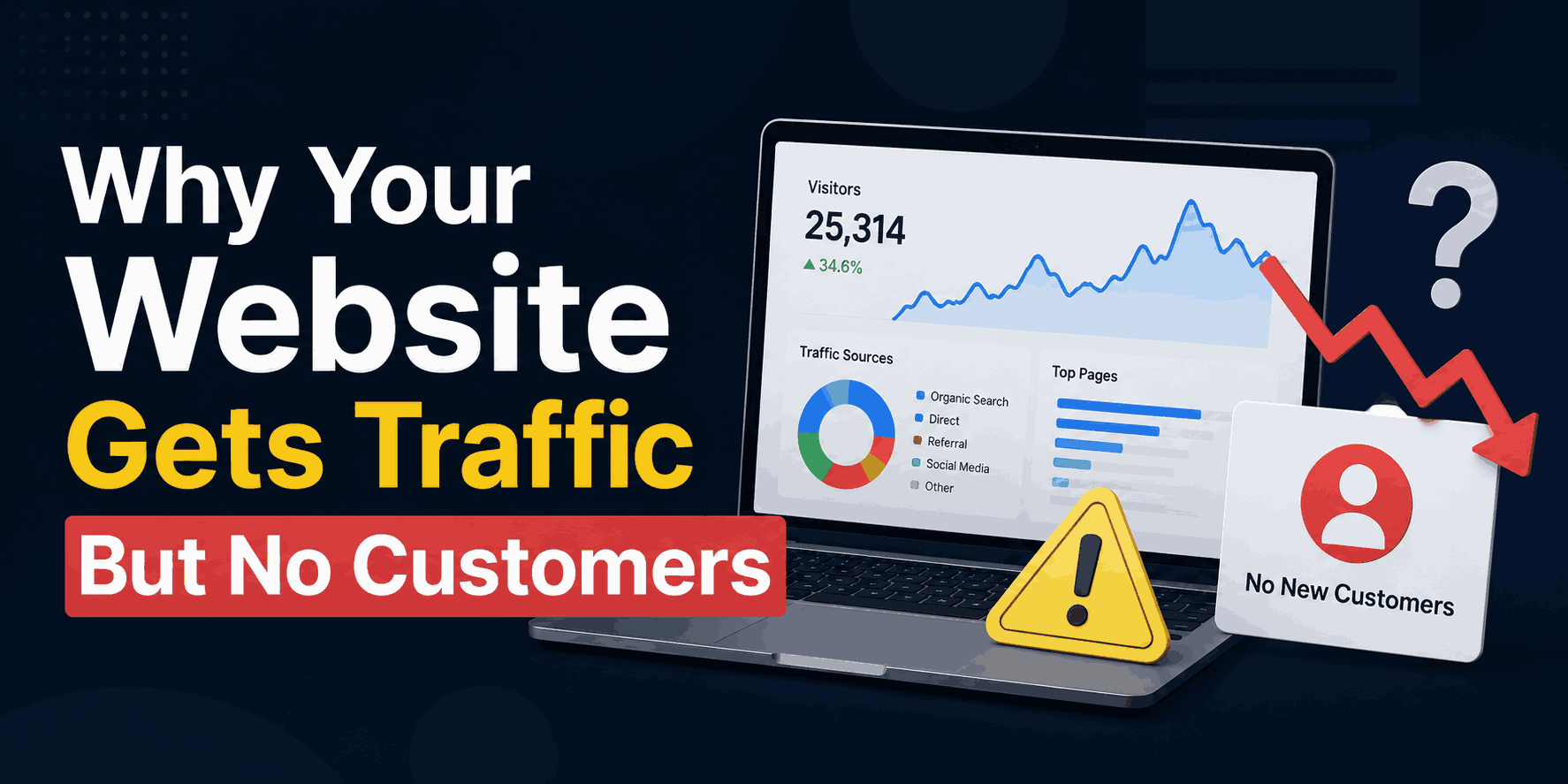
Getting traffic to your website feels great at first. You see the numbers going up in Google Analytics and think your marketing is finally working. But then you check your leads or sales and nothing really changes. People visit your website every day but they leave without contacting you buying anything or becoming customers.
This is one of the most common problems businesses face online. The truth is traffic alone does not grow a business. If your website is not built to convert visitors into customers even thousands of monthly visitors can become useless traffic.
In many cases the problem is not your SEO or ads. The real issue is what happens after people land on your website. Weak messaging poor user experience slow pages bad targeting or unclear offers can all stop visitors from taking action.
In this article we will break down the real reasons why your website gets traffic but still no customers and what you can do to turn those visitors into real leads sales and growth for your
business.
Why Website Traffic Alone Means Nothing
A lot of businesses focus too much on increasing website traffic because it looks like a sign of growth. More visitors usually feels exciting and in some cases it can help build brand awareness. But traffic by itself does not pay the bills. If people visit your website and leave without taking action then those numbers become nothing more than empty statistics.
Many websites get thousands of monthly visitors while generating very few leads or sales. This happens because attracting visitors is only one part of the process. What really matters is attracting the right people and giving them a reason to trust your business and take the next step. This is where a strong SEO content writing service can make a huge difference because high quality content not only drives traffic but also helps convert visitors into real customers.
.
Vanity Metrics Can Mislead Businesses
One of the biggest mistakes businesses make is obsessing over vanity metrics. High traffic page views and impressions may look impressive in reports but they do not always reflect real business growth. A website can rank for dozens of keywords and still fail to generate revenue.
This usually happens when businesses focus on traffic quantity instead of traffic quality. Getting random visitors from broad informational searches may increase analytics numbers but those users often have no buying intent. As a result businesses think their marketing is working while conversions remain low.
Real success online is not measured by how many people visit your website. It is measured by how many people become customers.
Traffic Without Intent Is Useless
Not all traffic has value. If your website attracts people who are not interested in your service product or offer they are unlikely to convert no matter how much traffic you generate.
For example a website may rank for educational keywords that bring in large amounts of visitors but those users are often only looking for information. They are not ready to buy contact a company or make a decision. This creates the illusion of growth without producing real results.
High intent traffic is completely different. These visitors are actively searching for solutions comparing services or looking for a business they can trust. When your content targets the right audience your chances of generating leads and sales increase dramatically.
The Real Goal Is Conversion
The real purpose of a website is not simply to attract visitors. The goal is to turn those visitors into leads customers or clients. That is where conversion becomes more important than traffic alone.
A website with lower traffic but a strong conversion rate will almost always outperform a website with massive traffic and poor user experience. Small improvements in messaging trust design and calls to action can often generate more revenue than spending thousands on additional traffic.
Businesses that understand this stop chasing empty numbers and start focusing on what actually drives growth. Instead of asking how to get more visitors they start asking how to convert the visitors they already have.
7 Brutal Reasons Your Website Gets Traffic But Still No Customers
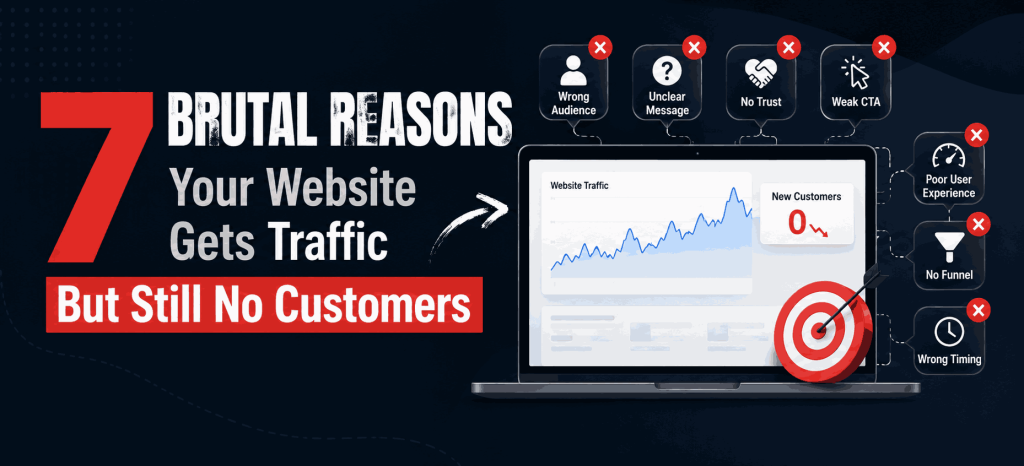
Getting traffic is only the first step. The real challenge begins after someone lands on your website. Many businesses spend months working on SEO running ads and posting content only to realize their website still is not generating leads or sales.
In most cases the problem is not visibility. The problem is conversion.
Here are the biggest reasons why visitors leave your website without becoming customers and what you can do to fix it.
1. You Are Bringing the Wrong People to Your Website
One of the biggest hidden problems in digital marketing is attracting visitors who were never going to buy in the first place.
A lot of websites focus heavily on increasing traffic numbers without thinking about search intent. They rank for broad informational keywords because those keywords are easier to target and usually generate more clicks. The problem is that informational traffic rarely converts well especially for small businesses trying to compete online. That is why having a clear SEO marketing strategy for small business is so important because attracting the right audience matters far more than simply increasing traffic numbers.
For example someone searching “what is SEO” is usually looking to learn something. They are not necessarily searching for an agency to hire. But someone searching “SEO agency for ecommerce” or “why my SEO is not generating leads” has much stronger buying intent.
This is why many websites get thousands of visitors but very few inquiries.
Your content should not only attract people. It should attract the right people. Businesses that generate high quality leads usually focus on buyer intent keywords instead of vanity traffic keywords.
A simple shift in keyword strategy can completely change the quality of your traffic.
2. Your Website Confuses Visitors Instead of Convincing Them
Most visitors decide within a few seconds whether they trust your website or leave it.
If your homepage does not clearly explain what you do who you help and why someone should choose your business people will leave fast. Confusing messaging kills conversions.
Many businesses make the mistake of using generic phrases like:
“We help businesses grow”
or
“We provide innovative solutions”
The problem is these statements say almost nothing. Visitors want clarity. They want to instantly understand what problem you solve and how you can help them.
Strong messaging speaks directly to the customer’s pain points. Instead of sounding corporate your website should feel clear human and solution focused.
Good websites reduce confusion. Bad websites create hesitation.
And hesitation destroys conversions.
3. Your Website Does Not Feel Trustworthy
People do not buy from websites they do not trust.
Even if your service is excellent visitors will hesitate if your website feels outdated poorly designed or incomplete. First impressions online matter more than most businesses realize.
When someone lands on your website they subconsciously ask themselves questions like:
Can I trust this business
Are these people experienced
Is this company legitimate
Have they helped other clients before
If your website does not answer those questions quickly visitors leave.
Trust is built through small details:
- modern design
- fast loading speed
- clear branding
- testimonials
- real case studies
- client logos
- professional copywriting
- transparent information
A website without social proof feels risky. That is why reviews case studies and testimonials can dramatically increase conversion rates.
People trust businesses that other people already trust.
4. Your Call To Action Is Too Weak
Many websites never clearly tell visitors what to do next.
This sounds simple but it is one of the biggest reasons websites fail to convert traffic into leads. If your CTA is vague passive or hidden users often leave without taking action.
Buttons like:
- Learn More
- Submit
- Click Here
are weak because they create very little motivation.
Strong CTAs are specific and outcome driven. They make the next step feel valuable and easy.
For example:
- Get a Free SEO Audit
- Book Your Free Strategy Call
- See How We Can Grow Your Traffic
- Get a Custom Marketing Plan
A strong CTA reduces friction and increases action.
Your website should guide visitors naturally instead of forcing them to guess what to do next.
5. Your Website Is Slow Frustrating or Hard to Use
Even great marketing cannot save a bad user experience.
Modern users are impatient. If your website loads slowly looks broken on mobile or feels difficult to navigate people leave almost immediately. Most visitors will not give you a second chance.
A slow website creates frustration before users even read your content. Poor mobile optimization makes things even worse because mobile traffic now dominates most industries.
Sometimes businesses focus heavily on SEO while ignoring UX completely. But traffic means nothing if users cannot comfortably interact with your website.
Good user experience feels invisible. Everything feels easy clear and natural.
Visitors should instantly know:
- where to click
- what your business offers
- how to contact you
- what action to take next
If using your website feels like work conversions will suffer.
6. You Do Not Have a Real Conversion Funnel
Many websites expect visitors to become customers instantly which almost never happens.
The reality is most people are not ready to buy during their first visit. They need trust education and multiple interactions before making a decision.
This is where a conversion funnel becomes important.
A strong funnel guides visitors step by step instead of throwing them directly toward a sale. It creates a journey.
For example:
- valuable content attracts attention
- a lead magnet captures contact information
- email follow ups build trust
- case studies remove objections
- consultation calls close the sale
Without a funnel businesses lose huge amounts of potential customers simply because there is no follow up process.
Not every visitor will buy today. But that does not mean they are worthless.
The businesses that win online are usually the ones that nurture visitors instead of ignoring them.
7. Your Visitors Are Not Ready to Buy Yet
Not all traffic converts immediately and that is normal.
A large percentage of website visitors are still researching comparing options or trying to better understand their problem. If your website only focuses on immediate sales you may lose people who could become customers later.
This is especially common with SEO traffic because many users are still in the awareness stage.
That is why educational content email marketing retargeting and lead nurturing are so important. They help businesses stay visible while trust builds over time.
Instead of treating every visitor like a ready buyer smart businesses create content for different stages of the customer journey.
Some visitors need information
Some need reassurance
Some need proof
Some are ready to buy immediately
Understanding this changes the way you approach conversion optimization completely.
The goal is not just getting traffic. The goal is building a system that turns attention into trust and trust into customers.
How to Turn Website Traffic Into Real Customers
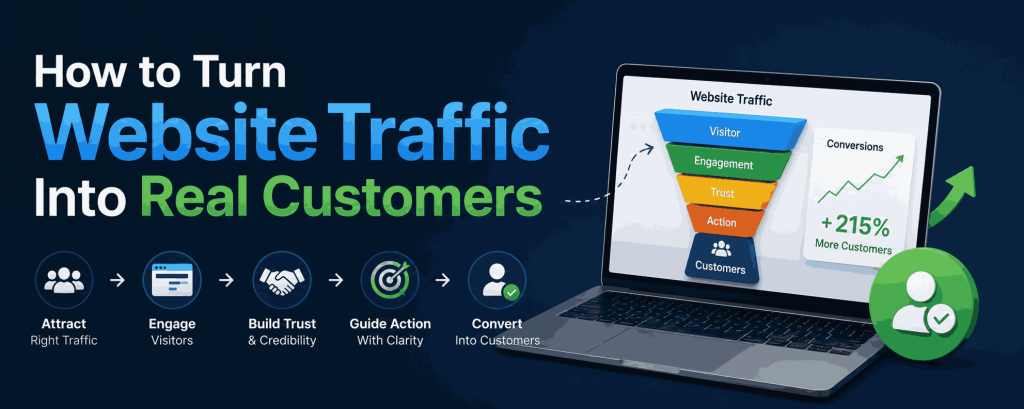
Getting traffic is important but traffic alone does not grow a business. What actually matters is what happens after someone lands on your website. If visitors leave without taking action your website is leaking potential customers every single day.
The good news is that most conversion problems can be fixed. Small improvements in messaging, user experience, trust, and targeting can completely change how your website performs. In many cases, businesses do not need more traffic at all. They simply need a better system for converting the traffic they already have.
This is also closely connected to understanding How to Rank in ChatGPT since better visibility in AI-driven search is only valuable when it leads to meaningful engagement and conversions.
Here is how successful businesses turn visitors into leads customers and long term clients.
Speak Clearly So Visitors Instantly Understand Your Value
One of the fastest ways to improve conversions is improving your messaging.
When people land on your website they should immediately understand three things:
what you do
who you help
and why they should trust you
Most websites fail because their messaging is too vague generic or overly corporate. Visitors do not want to spend time trying to figure out what your business actually offers. If your website creates confusion people leave within seconds.
Strong messaging focuses on the customer not the company. Instead of talking endlessly about your business your website should explain the problem you solve and the result customers can expect.
Clear messaging creates trust quickly. It helps visitors feel like they are in the right place and encourages them to keep exploring your website instead of leaving.
The simpler and more direct your message feels the easier it becomes for users to take action.
Stop Chasing Traffic and Start Targeting Buyers
A lot of websites attract visitors who were never planning to buy anything. This usually happens because businesses focus on high volume keywords instead of buyer intent keywords.
Traffic without intent rarely converts well.
Someone searching for general information may read your article and leave immediately. But someone actively searching for a solution service or provider is much more likely to become a lead.
This is why search intent matters so much in SEO and content marketing.
Businesses that generate consistent leads usually create content around problems buying decisions comparisons and solutions. Their content speaks directly to people who are already looking for help.
Instead of only trying to increase clicks smart businesses focus on attracting qualified traffic. Less traffic with stronger intent often produces far better results than huge amounts of low quality visitors.
Good SEO is not about getting everyone to your website. It is about getting the right people there.
Turn Your Landing Pages Into Conversion Machines
Many landing pages look attractive but fail to convert because they are missing structure clarity and direction.
A high converting landing page guides users naturally toward action. It removes distractions builds trust and keeps the visitor focused on one clear goal.
The best landing pages usually feel simple. They explain the problem quickly show the value of the solution and make the next step easy. Visitors should never feel overwhelmed with unnecessary information or confusing layouts.
Good landing pages also understand psychology. They reduce friction and answer objections before users even ask questions. Things like trust signals testimonials case studies and clear headlines help visitors feel more confident about taking action.
Every section on the page should move the user closer to conversion.
If your landing page looks good but does not generate leads the problem is often not design. It is usually strategy.
Make Your Calls To Action Impossible to Ignore
Many businesses lose customers simply because their calls to action are too weak.
Visitors need direction. If your website does not clearly tell users what to do next most people will leave without taking any action at all.
Strong CTAs create momentum. They feel specific valuable and low friction. Instead of generic phrases your CTA should explain exactly what users will get by clicking.
The best calls to action also reduce hesitation. Offers like free audits strategy calls free demos or personalized recommendations feel much safer than immediate hard selling.
Placement matters too. A great CTA should appear naturally throughout the website instead of only existing at the bottom of the page where many users never scroll.
Good websites guide users step by step. They never leave visitors wondering what to do next.
Build Trust Before You Try to Sell Anything
Trust is one of the biggest factors behind online conversions.
People are naturally cautious online especially when they are considering spending money or contacting a business. Even if your service is excellent visitors will hesitate if your website does not feel trustworthy.
This is why social proof matters so much.
Testimonials reviews case studies and client results help remove uncertainty. They show visitors that other people already trusted your business and had positive experiences.
Trust is also built through consistency. A professional design clear branding quality content and transparent information all influence how users perceive your business.
Most visitors are not just evaluating your offer. They are evaluating whether your business feels credible.
The more trust your website creates the easier conversion becomes.
Make the User Journey Feel Effortless
Complicated websites kill conversions.
If visitors struggle to navigate your website find information or understand the next step they usually leave. People want fast easy experiences online. The more friction users experience the lower your conversion rate becomes.
A strong website feels intuitive. Users can move through pages naturally without confusion. Important information is easy to find and the conversion process feels smooth from beginning to end.
This is especially important for mobile users. A website that feels frustrating on mobile devices can lose a huge percentage of potential customers almost instantly.
Simplifying the user journey does not mean removing information. It means making the experience easier clearer and more focused.
The easier your website feels to use the more likely visitors are to trust your business and take action.
Use Data to Understand Why Visitors Leave
One of the biggest mistakes businesses make is guessing why their website is not converting.
Without data it becomes almost impossible to understand user behavior accurately. Analytics tools help reveal what visitors are actually doing on your website instead of what you assume they are doing.
Sometimes users leave because a page loads too slowly. Sometimes they stop scrolling halfway through the page. Sometimes they click important buttons but abandon forms before submitting them.
This type of behavior data is extremely valuable because it exposes hidden conversion problems.
Tools like heatmaps session recordings and analytics reports help businesses understand where users lose interest where friction exists and which pages perform best.
The most successful websites are rarely built through guesswork. They improve through testing analyzing and optimizing over time.
Conversion optimization is not a one time fix. It is an ongoing process of understanding users and improving their experience continuously.
The Silent Mistakes That Keep Your Website From Generating Customers
Many businesses believe their website problem is lack of traffic. So they invest more money into SEO ads and content hoping more visitors will eventually solve everything. But in reality the issue is often much deeper.
A website can look modern rank on Google and still fail to generate consistent leads because of a few critical strategic mistakes. These mistakes are extremely common and they quietly destroy conversions without businesses realizing it.
Understanding these problems is often the difference between a website that simply gets clicks and a website that actually grows revenue.
Focusing on SEO While Ignoring Conversion
A lot of businesses become obsessed with rankings traffic and impressions. They spend months trying to reach the first page of Google but never think seriously about what happens after users arrive on the website.
SEO can bring attention but it cannot guarantee customers.
If your messaging is weak your offer is unclear or your website experience feels confusing even highly targeted traffic will leave without converting. This is why some businesses generate thousands of visitors every month while still struggling to get inquiries.
Traffic should never be the final goal. Conversion is what turns marketing into revenue.
The most successful businesses treat SEO and conversion optimization as part of the same system instead of separating them.
Buying Cheap Traffic That Never Converts
Not all traffic is valuable.
Some businesses try to grow quickly by purchasing low quality traffic from cheap ads broad campaigns or irrelevant audiences. At first this can make analytics numbers look impressive but the traffic usually has no real buying intent.
Visitors who are not interested in your service will rarely become leads no matter how much traffic you generate. This creates a dangerous situation where businesses continue spending money while seeing very little return.
High quality traffic always performs better than high volume traffic.
A smaller audience with strong intent trust and relevance will almost always generate more conversions than thousands of random visitors who were never interested in buying anything.
Good marketing is not about attracting everyone. It is about attracting the right people.
Designing a Beautiful Website With No Real Strategy
Many websites look visually impressive but completely fail as business tools.
Businesses often focus heavily on aesthetics animations and design trends while ignoring the actual purpose of the website. A website should not only look modern. It should guide users toward action.
Without strategy even beautiful websites struggle to convert.
Every page should have a clear purpose. Every section should support the customer journey. Headlines content layout and calls to action should all work together to move visitors closer to conversion.
Good design is not just visual. Good design creates clarity trust and direction.
The best websites are usually the ones that feel simple focused and easy to understand rather than overly complicated.
Expecting Instant Sales Without a Funnel
One of the biggest online marketing mistakes is expecting visitors to become customers immediately after landing on a website.
Most people are not ready to buy during their first interaction with a business. They need time to research compare options and build trust before making decisions.
Without a funnel businesses lose a huge number of potential customers.
A conversion funnel helps guide users through different stages of the buying journey. Instead of forcing immediate sales it gradually builds trust through content lead magnets emails case studies and follow ups.
Businesses without funnels often depend entirely on direct conversions which creates inconsistent results and lost opportunities.
A strong funnel keeps potential customers connected to your business even if they are not ready to buy today.
Running a Website Without Tracking What Users Actually Do
Many businesses have no real understanding of how visitors behave on their website.
They do not know:
- where users leave
- which pages perform badly
- what causes friction
- or why conversions are failing
Without conversion tracking businesses are forced to rely on assumptions instead of real data.
Tracking tools reveal what users actually do after landing on the website. They help identify problems that would otherwise remain invisible. Sometimes a small issue like a confusing form slow page or weak CTA can significantly reduce conversions without anyone noticing.
Businesses that consistently improve conversions usually make decisions based on user behavior data not guesses.
Tracking is what turns marketing from random experimentation into a measurable growth system.
Case Study: How One Business Increased Conversions Without More Traffic
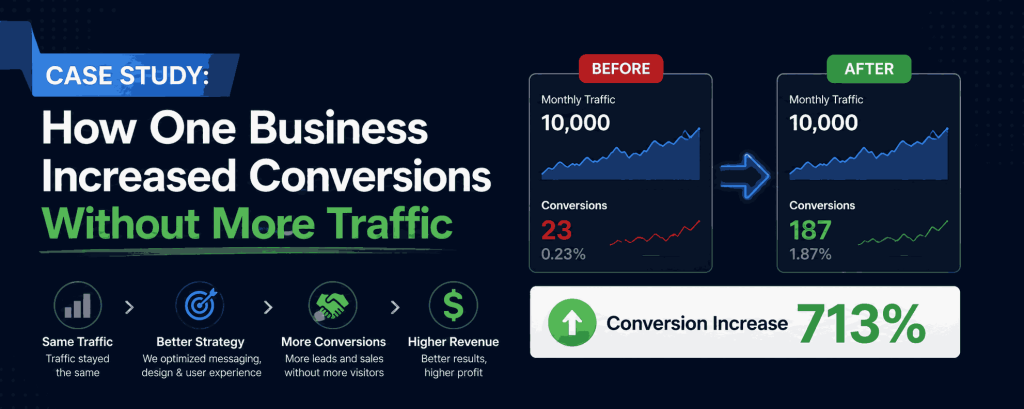
A growing service based business was receiving a steady amount of website traffic through SEO and paid ads but conversions remained extremely low. Despite generating thousands of monthly visitors the website produced very few qualified leads.
At first the business assumed the problem was traffic volume so they continued investing more money into marketing campaigns. But after several months the results barely improved.
The issue was not traffic. The issue was conversion.
The Problem Was Hidden Inside the User Experience
After analyzing the website several major problems became obvious.
The homepage messaging was too vague and failed to explain the value of the service clearly. Important calls to action were difficult to notice and the website lacked trust signals like testimonials and case studies.
The mobile experience was also frustrating. Some pages loaded slowly and the contact process felt unnecessarily complicated.
Visitors were reaching the website but they were not being guided toward action.
Small Strategic Changes Created a Huge Difference
Instead of increasing traffic the business focused on improving the existing website experience.
The messaging was rewritten to focus directly on customer pain points and desired outcomes. Calls to action became clearer more visible and more action driven. Testimonials and case studies were added throughout the website to increase trust.
The landing pages were simplified and the mobile experience was improved to reduce friction.
No major redesign was needed. The business simply removed confusion and made the path to conversion easier.
The Result Was More Leads Without More Visitors
Within a few months the website started generating significantly more inquiries even though traffic levels stayed almost the same.
The business did not need more clicks. It needed a better conversion strategy.
This is one of the biggest misconceptions in digital marketing. Many businesses believe growth only comes from increasing traffic when in reality improving conversion rates can often generate faster and more profitable results.
Sometimes the fastest way to grow your business is not getting more visitors.
It is converting the visitors you already have.
Frequently Asked Questions
Why is my website getting traffic but no customers?
This usually happens when your website attracts the wrong audience or fails to convert visitors effectively. Problems like weak messaging poor user experience slow loading pages unclear calls to action and lack of trust signals can all stop visitors from becoming customers even if your traffic numbers are high.
Can SEO increase traffic but still fail to generate leads?
Yes absolutely. SEO can bring large amounts of visitors to your website but if the keywords target informational searches instead of buyer intent searches conversions may remain low. Ranking on Google is important but attracting people who are actually ready to buy matters even more.
What is a good website conversion rate?
A good conversion rate depends on your industry traffic source and business model. However many websites convert between 2% and 5% while highly optimized websites can perform much better. The real focus should not only be conversion rate itself but also lead quality and customer value.
How do I know if my website has conversion problems?
Some common signs include high bounce rates low lead volume short session durations and visitors leaving without taking action. If your website gets steady traffic but very few inquiries or sales there is usually a conversion issue somewhere in the user journey.
Why do visitors leave my website so quickly?
Visitors often leave quickly when websites feel confusing slow outdated or difficult to use. Weak headlines poor design too much clutter and unclear offers can also make users lose interest within seconds. First impressions online are extremely important.
Is more traffic always better for business growth?
Not necessarily. More traffic only helps when the traffic is relevant and high intent. A smaller number of qualified visitors can generate far more revenue than massive amounts of low quality traffic. Businesses that focus only on traffic volume often struggle with low conversions.
What is the fastest way to improve website conversions?
Improving messaging simplifying the user experience strengthening your calls to action and building trust usually create the fastest results. In many cases small strategic changes can increase conversions significantly without needing more traffic or a complete website redesign.
Traffic Means Nothing Without Conversion
Getting traffic is only half the battle. The real growth happens when your website can turn attention into trust and trust into customers. Many businesses spend too much time chasing clicks while ignoring the experience visitors have after they land on the website. The difference between a website that simply gets traffic and a website that generates real revenue usually comes down to strategy conversion and understanding user behavior. When your messaging targeting and user experience work together even existing traffic can become a powerful source of consistent leads and long term business growth.