

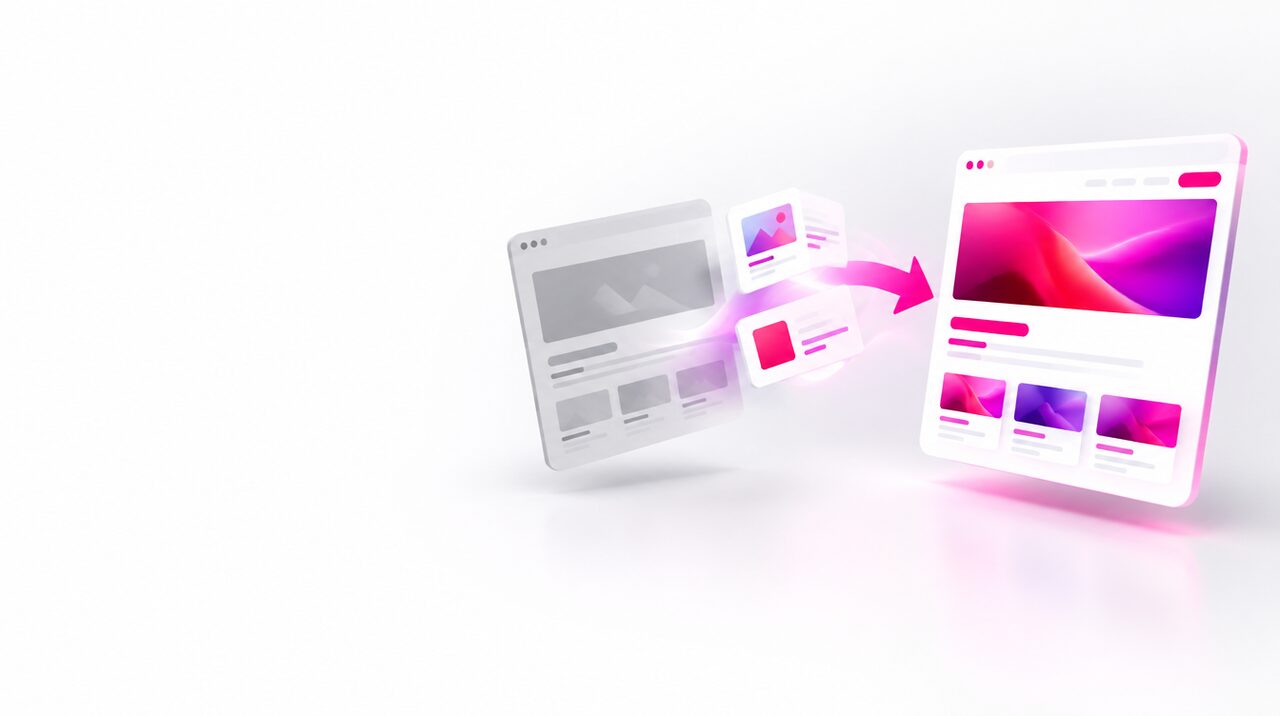
A website redesign in London is rarely just a fresh coat of paint. Done well, it fixes the things that stop a site from earning enquiries: slow pages, confusing navigation, weak mobile layouts and content that no longer reflects the business. Done badly, it can wipe out the search visibility you spent years building. This guide explains when a redesign is worth it, what a sensible process looks like and how to avoid the common mistakes.
We are a London agency ourselves, so this is written from the point of view of how we would want to run your project. If you are comparing options, see how we work as a web design agency in London, and our bespoke website design service for projects that need a fully custom build.
Signs It Is Time to Redesign Your Website
A site looking dated is a weak reason on its own. The stronger reasons are about performance and fit:
- It no longer matches the business. Services, pricing, audience or positioning have changed, but the site still describes the old company.
- Visitors leave without acting. Analytics show people landing and bouncing, forms going unused or phone numbers hard to find.
- Mobile is an afterthought. Text is cramped, buttons are hard to tap or pages take too long to appear on a phone.
- It is hard to update. Simple edits need a developer, or the platform is outdated and no longer maintained.
- Search visibility has stalled. The structure, page speed or content is holding back pages that should be ranking.
Redesign, Refresh or Rebuild?
These words are used loosely, so agree on the scope before you compare quotes.
- Refresh: updated visuals, content and calls to action on the existing structure and platform.
- Redesign: new design and page layouts, usually with a reworked navigation and content structure, often on the same platform.
- Rebuild: a new design and a new technical foundation, for example moving to a different CMS or a bespoke build.
If your current site is slow, hard to edit or limits what you need, a rebuild may serve you better than a redesign. Our guide to bespoke vs template websites helps you weigh that choice.
How a Website Redesign Project Should Run
1. Discovery and audit
Start with evidence, not mood boards. Review analytics, the pages that bring in visitors and enquiries, the content that matters and the technical state of the current site. This is also when you agree what success looks like.
2. Structure and content
Decide which pages stay, which merge and which are retired. Plan the navigation around what visitors need to do. Content should be reviewed before design starts, so the design fits real copy rather than placeholder text.
3. Design
You should see designs for key pages on desktop and mobile and be able to give feedback before development begins.
4. Build and testing
Development, then testing across browsers and devices, with attention to speed, accessibility and forms. Ask what is tested and who signs it off.
5. Launch and aftercare
A careful launch includes redirects from old URLs, checking that tracking works and monitoring search visibility and errors in the weeks that follow.
Protecting Your Search Visibility
The biggest avoidable risk in a redesign is losing pages that already rank or attract links. Before launch, list the current URLs, decide where each one goes, redirect any URL that changes and keep titles, headings and useful content on pages that perform. Our website redesign SEO checklist walks through this step by step. If you want ongoing help once the site is live, we also offer search engine optimisation.
What Affects the Cost of a Redesign
There is no single price, because projects differ widely. The main drivers are:
- the number and complexity of pages and templates;
- whether content needs to be written or reorganised;
- custom functionality, integrations or an online shop;
- whether the platform changes and how much content must be migrated;
- how much SEO and performance work is included.
Ask every agency for a written scope so quotes can be compared fairly. Our website cost guide explains what to look for.
Questions to Ask Before You Hire an Agency
- How do you protect existing rankings during a redesign?
- Will I be able to edit the site myself afterwards?
- How many rounds of design feedback are included?
- What happens if the launch date or scope changes?
- Who owns the design, content, domain and hosting accounts?
More on this in our guide to choosing a web design agency in London.
Frequently Asked Questions
How often should a website be redesigned?
There is no fixed schedule. Review performance regularly and redesign when the site stops supporting the business, rather than on a calendar. Many businesses make smaller improvements continuously and a larger redesign every few years.
Will a redesign hurt my Google rankings?
It can if URLs, content and metadata are changed carelessly. With a URL map, 301 redirects and checks after launch, the risk is much lower and a redesign can improve speed and structure.
How long does a website redesign take?
It depends on size and complexity, and on how quickly feedback and content are provided. Ask for a timeline with stages and review points in the proposal.
Can I keep my existing content?
Often yes. Content that performs well should be kept and improved, while outdated or duplicate pages can be merged or removed with redirects.
Should I redesign my site or build a new one?
If the structure and platform are sound, a redesign is usually enough. If the platform is slow, insecure or limits what you need, a rebuild is worth considering.
Talk to London Design About Your Redesign
If your website is not working as hard as it should, we are happy to review it and give honest advice, including when a smaller update is the better option. London Design is based at Berkeley Square House, Berkeley Square, London W1J 6BD. Contact us or call +44 20 7846 5323 to discuss your project.