


Every business owner reaches a critical decision point while growing their online presence. Should you invest in SEO or allocate your budget to Google Ads? The answer can shape the future of your business. It can be the difference between building a sustainable source of qualified traffic or spending thousands of dollars on marketing with little long term return.
If you are unsure which strategy deserves your investment and want to understand which one delivers the highest return on investment this guide is for you.
In this in depth comparison we will take an objective data driven look at SEO vs Google Ads. You will discover how each strategy works where it performs best what it costs and when it makes sense to use one over the other. By the end of this guide you will have the knowledge to choose the right approach for your business goals and create a marketing strategy that drives consistent growth.
Quick Answer: SEO or Google Ads?
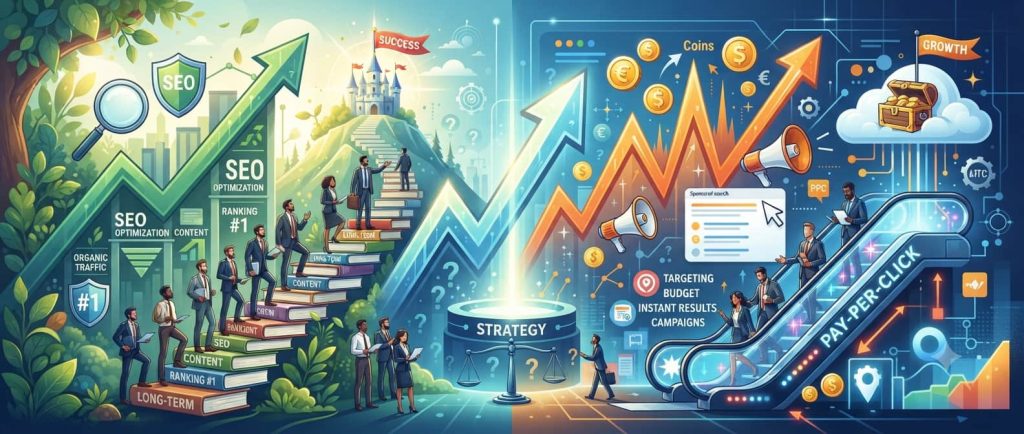
If you do not have time to read the full guide this quick summary will help you understand the key differences between SEO and Google Ads in less than a minute.
Short Answer: There is no single winner between SEO and Google Ads because each serves a different business goal.
Google Ads is the best choice when you need immediate traffic quick sales rapid lead generation or want to validate a new product or market. SEO is the smarter long term investment for building sustainable organic traffic lowering customer acquisition costs over time and establishing trust and authority in your industry.
For most businesses the most effective digital marketing strategy is not choosing one over the other. It is combining SEO and Google Ads to capture both short term opportunities and long term growth.
| Comparison Factor | SEO | Google Ads |
|---|---|---|
| Traffic Source | Organic search results | Paid search advertisements |
| Time to See Results | Usually 3 to 12 months depending on competition | Immediate visibility within hours after launching campaigns |
| Initial Cost | Higher upfront investment in content and optimization | Flexible budget with pay per click pricing |
| Long Term Cost | Lower over time as rankings continue generating traffic | Continuous advertising spend is required |
| Return on Investment | Excellent long term ROI | Strong short term ROI when campaigns are optimized |
| Traffic Sustainability | High and continues after optimization efforts | Stops immediately when advertising budget ends |
| Best For | Long term growth brand authority and consistent lead generation | Fast sales product launches seasonal campaigns and lead generation |
| Trust Level | Higher user trust because rankings are earned organically | Lower trust since users recognize advertisements |
| Click Through Rate | Generally higher for top organic rankings | Depends on ad quality relevance and competition |
| Scalability | Gradual growth through ongoing optimization | Can scale quickly by increasing advertising budget |
| Targeting Options | Keyword focused with content optimization | Advanced targeting by keywords audience location device and demographics |
| Brand Authority | Builds strong credibility and industry authority | Limited impact on long term brand authority |
| Ideal Business Stage | Established businesses focused on sustainable growth | New businesses startups and companies needing immediate visibility |
| Performance Tracking | Requires ongoing SEO analytics and monitoring | Real time campaign reporting and conversion tracking |
| Overall Recommendation | Best for long term business growth | Best for immediate traffic and quick results |
Understanding the Battle Between SEO and Google Ads
In the world of Search Engine Marketing (SEM) there are two primary ways to reach your target audience through Google. The debate around SEO vs Google Ads has been ongoing for years because each approach offers unique advantages for attracting customers and growing a business.
One strategy focuses on earning free organic visibility while the other delivers instant exposure through paid advertising. To decide which one is right for your business it is important to understand how both work and how Google displays them in search results.
What Is SEO? The Long Term Strategy for Earning Organic Traffic
Search Engine Optimization (SEO) is the process of improving your website so it ranks higher in Google’s organic search results without paying for every visitor. Instead of buying visibility you earn it by demonstrating that your website provides the most relevant and valuable answer to a user’s search.
An effective SEO strategy goes far beyond optimizing keywords. It involves improving your website’s technical performance creating valuable content enhancing the user experience and earning high quality backlinks from trusted sources. Together these elements help search engines recognize your site’s authority relevance and overall quality. If you are wondering How Much Does SEO Cost in 2026 the answer depends on factors such as your industry competition business goals and the scope of your SEO strategy. Investing in a well planned SEO campaign can deliver long term organic growth and a significantly higher return on investment compared to many other digital marketing channels.
Whenever someone performs a search Google evaluates hundreds of ranking signals to determine which pages deserve the top organic positions. If your website meets those quality standards it can attract qualified visitors consistently without paying for each click.
One of the biggest advantages of SEO is its ability to generate sustainable organic traffic over time. As your rankings improve your website becomes a valuable digital asset that continues to drive leads and customers long after the initial optimization work is complete.
What Is Google Ads? The Fastest Way to Reach the Top of Search Results
Google Ads formerly known as Google AdWords is Google’s paid advertising platform that allows businesses to appear at the top of search results almost instantly. It operates primarily on a Pay Per Click (PPC) model meaning you only pay when someone clicks on your advertisement.
Unlike SEO which requires time to build authority Google Ads can place your website above the organic listings within hours of launching a campaign. Sponsored listings are clearly labeled as ads making them highly visible to users who are actively searching for products or services.
Google Ads operates on a pay-per-click model, meaning businesses are not charged just because their ads appear in search results. Instead, costs are generated only when users interact with the advertisement by clicking on it and visiting the website. This expense is known as Cost Per Click (CPC), and its value is influenced by factors such as keyword competition, ad relevance, landing page quality and expected click-through rate. Understanding the difference between Website Design vs Website Development is also essential when building effective landing pages, as both design and technical performance can directly impact advertising results, user experience and conversion rates.
Because campaigns can be launched quickly adjusted in real time and targeted with exceptional precision Google Ads is often the preferred solution for businesses that need immediate traffic lead generation product launches or time sensitive promotions. However once your advertising budget stops the flow of paid traffic ends as well.
The Fundamental Differences Between SEO and Google Ads
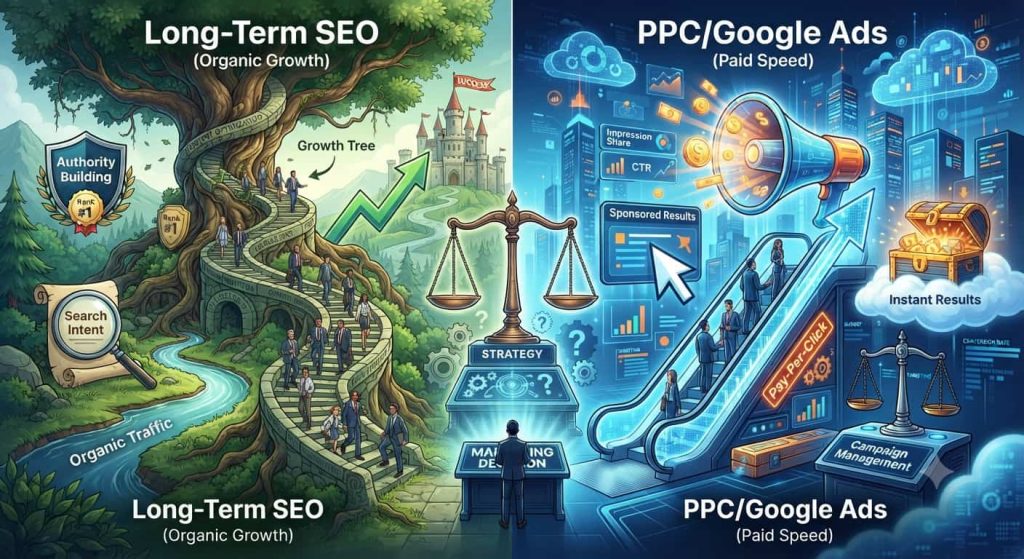
Choosing the right digital marketing strategy requires more than comparing free traffic with paid traffic. While both SEO and Google Ads help businesses appear in search results they operate in fundamentally different ways. Understanding these differences will help you invest your marketing budget more effectively and choose the strategy that aligns with your business goals.
Organic Traffic vs Paid Traffic
One of the biggest differences in the SEO vs Google Ads debate is where your traffic comes from.
With SEO your visitors arrive through Google’s organic search results. They discover your website because Google’s algorithms consider your content valuable relevant and trustworthy for their search query. Since these rankings are earned rather than purchased many users naturally place greater trust in organic results and are more likely to click on them.
Organic traffic also creates long term value. Once your pages rank well they can continue attracting qualified visitors without requiring payment for every click.
Google Ads works differently. Every visitor comes through paid advertisements that appear at the top of Google’s search results with a Sponsored label. Instead of waiting to earn visibility you purchase it.
One of the greatest strengths of Google Ads is its advanced targeting capabilities. You can display ads based on location device language time of day audience behavior and many other signals. This level of precision allows businesses to reach highly qualified prospects exactly when they are searching for a product or service.
Speed of Results: Long Term Growth vs Instant Visibility
Time is often the deciding factor when businesses compare SEO and Google Ads.
SEO is a long term investment. After publishing content Google must crawl your pages index them evaluate their quality and measure user engagement before rankings begin to improve. Building authority also requires earning backlinks and consistently demonstrating expertise within your industry.
Depending on your competition meaningful SEO results typically take anywhere from three to twelve months although highly competitive industries may require even more time.
Google Ads delivers the opposite experience.
Once your campaign is created your budget is approved and your ads are live your website can begin appearing in Google search results within hours. Qualified traffic starts arriving almost immediately making Google Ads the preferred solution for product launches seasonal promotions limited time offers and businesses that need leads without delay.
Cost Comparison: Investing in Assets vs Paying for Every Click
Another major consideration is the difference between SEO costs and Google Ads costs.
With Google Ads every click has a price. Your advertising budget directly controls how much traffic your website receives. The moment your budget is exhausted your ads disappear and the flow of visitors stops.
SEO does not require paying Google for clicks but it is not free.
Successful SEO requires investment in technical optimization high quality content keyword research website performance user experience and authoritative link building. These activities demand time expertise and resources.
The key difference is that SEO creates a lasting digital asset. As your website gains authority the cost of acquiring new visitors generally decreases while your organic traffic continues to grow. This often results in a lower customer acquisition cost over the long term and a significantly higher return on investment.
Long Term Strategy vs Short Term Performance
Perhaps the most important distinction is how each strategy contributes to the future of your business.
SEO is designed to build long term business value. Every optimized page every valuable article and every high quality backlink strengthens your website’s authority. Over time these assets compound creating a sustainable source of traffic leads and revenue that continues working long after the original investment.
Google Ads is built for speed and flexibility.
It is ideal for launching new products promoting seasonal campaigns testing new markets generating immediate leads or driving short term sales. Campaigns can be adjusted quickly and performance can be measured almost instantly.
However paid advertising is not a permanent asset. Once advertising stops visibility disappears. Businesses that rely exclusively on paid campaigns often become dependent on continuously increasing advertising budgets to maintain growth.
For most successful companies the strongest strategy is not choosing one channel over the other. It is combining the long term authority of SEO with the immediate visibility of Google Ads to create a balanced marketing system that delivers both short term wins and sustainable growth.
Breaking Down SEO: The Hidden Advantages and Challenges of Search Engine Optimization

To make a fair comparison between SEO and PPC it is important to evaluate the strengths and weaknesses of each strategy independently. Let’s begin with SEO and examine why it remains one of the most valuable long term marketing investments for businesses.
Why SEO Is One of the Most Powerful Marketing Strategies
Lower Marketing Costs Over Time
One of the biggest advantages of SEO is that you do not pay for every visitor who clicks on your website. Unlike paid advertising where traffic stops when your budget runs out organic traffic continues to grow without increasing your cost per click.
As your rankings improve your cost of acquiring new customers typically decreases making SEO one of the highest return on investment marketing channels over the long term.
Builds Trust and Brand Authority
People naturally trust Google’s organic search results more than advertisements. When your website consistently appears on the first page users view your business as a credible source of information and a trusted solution in your industry.
Strong organic rankings also strengthen your brand reputation making potential customers more likely to choose your business over competitors.
Long Lasting Results
SEO creates lasting value.
Even if you temporarily reduce your optimization efforts your rankings and traffic usually do not disappear overnight. Well optimized content can continue generating qualified visitors leads and sales for months or even years after it is published.
This makes SEO a true digital asset rather than a temporary marketing expense.
Higher Click Through Rates
Research consistently shows that organic search results receive the majority of clicks on Google. Many users intentionally skip sponsored listings because they prefer unbiased search results that have earned their rankings naturally.
Appearing among the top organic positions often leads to significantly higher click through rates and stronger user engagement.
The Hidden Challenges of SEO
Results Take Time
SEO is not designed for businesses that need immediate sales.
Building authority improving rankings and earning Google’s trust requires patience. Depending on your industry and competition it may take several months before meaningful organic traffic begins to generate measurable business results.
For companies seeking instant visibility SEO alone is rarely enough.
Google’s Algorithms Constantly Evolve
Google updates its search algorithms thousands of times each year with several major updates capable of reshaping search rankings across entire industries.
A strategy that performs well today may require adjustments tomorrow. Successful SEO demands continuous monitoring testing and adaptation to maintain strong performance over time.
SEO Requires Ongoing Expertise
Effective SEO is not a one time project.
It combines technical optimization on page SEO content strategy user experience keyword research link building and performance analysis into one continuous process. Each area requires specialized knowledge and all of them must work together to achieve sustainable rankings.
Businesses that treat SEO as an ongoing investment rather than a one off task are far more likely to achieve long term success.
Breaking Down Google Ads: The Hidden Advantages and Challenges of Pay Per Click Advertising
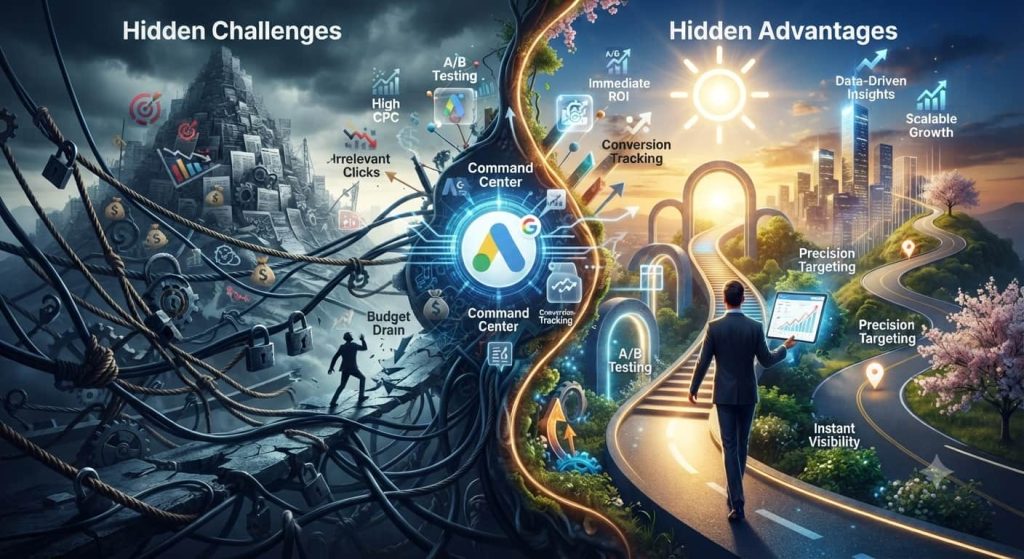
Paid advertising has become an essential part of modern digital marketing. While the SEO vs Google Ads debate often highlights the speed and flexibility of paid campaigns many businesses overlook both the opportunities and the risks that come with investing in Google Ads. Understanding these advantages and challenges will help you make smarter decisions and maximize your return on investment.
The Biggest Advantages of Google Ads
Exceptional Speed
One of the greatest benefits of Google Ads is how quickly it delivers results. A well structured campaign can begin generating qualified traffic leads and sales within hours of going live. For businesses that need immediate visibility Google Ads offers a level of speed that organic search simply cannot match.
Precise Keyword Targeting
Google Ads gives advertisers complete control over the search queries that trigger their ads. You can target highly specific keywords while excluding irrelevant searches through negative keywords ensuring your budget is focused on users with genuine purchase intent instead of wasted clicks.
Complete Budget Control
Unlike many traditional advertising channels Google Ads allows you to define exactly how much you want to spend. You can set daily budgets adjust bids at any time and scale campaigns up or down based on business performance without exceeding your financial limits.
Fast Testing and Conversion Optimization
Google Ads is one of the fastest ways to validate new products services or marketing messages. By monitoring conversion rates click through rates and user behavior you can quickly identify which offers landing pages and advertising copy produce the best results before investing in long term marketing strategies.
The Biggest Challenges of Google Ads
Continuous Advertising Costs
Google Ads delivers excellent short term results but it does not create a lasting marketing asset. The moment you stop funding your campaigns your ads disappear and your traffic drops almost immediately. Unlike SEO paid traffic exists only as long as your advertising budget remains active.
Increasing Cost Per Click
Highly competitive industries often experience aggressive bidding wars that drive up Cost Per Click (CPC). Markets such as legal services software real estate travel and web development can become extremely expensive making it more difficult to maintain profitable advertising campaigns without careful optimization.
Requires Constant Management
Successful Google Ads campaigns require ongoing attention. Performance must be monitored regularly negative keywords should be updated bidding strategies refined and landing pages continuously optimized. Without active campaign management poor targeting or a low Quality Score can quickly consume your advertising budget while generating little or no return.
Which One Is Better for Small Businesses and Startups?
One of the most common questions business owners ask is Which is better for a small business: SEO or Google Ads?
The truth is there is no universal answer. The right choice depends on your available budget how quickly you need results and whether your priority is immediate growth or long term success.
When You Should Choose SEO
SEO is the better investment if your business matches the following situations.
You Have a Limited Marketing Budget
If you cannot afford to spend a significant amount on paid advertising every month SEO allows you to build visibility gradually. By creating valuable content and following SEO best practices you can attract qualified traffic without paying for every visitor.
You Want to Build a Trusted Brand
Businesses that invest in search engine optimization establish authority over time. Publishing helpful educational content allows potential customers to discover your brand throughout their buying journey making your business a trusted resource rather than just another advertiser.
Your Sales Cycle Is Long
If customers typically spend weeks or months researching before making a purchase SEO can support them at every stage. Informative articles buying guides and educational resources help build trust long before a purchasing decision is made making SEO especially effective for B2B companies professional services and high value products.
Real World Example
Imagine you own a new online store that sells handcrafted leather bags.
Instead of relying entirely on advertising you publish detailed guides such as How to Tell Genuine Leather from Fake Leather or How to Care for Leather Bags. These articles attract organic visitors who are actively researching the topic. Over time many of those readers become loyal customers while your website continues earning traffic without paying for every click.
When Google Ads Is the Better Choice
There are situations where Google Ads delivers far greater value than SEO.
You Need Immediate Sales
If your business depends on generating revenue quickly Google Ads can begin driving qualified traffic within hours. This makes it ideal for companies that cannot afford to wait several months for organic rankings to improve.
You Are Promoting a Limited Time Campaign
Seasonal promotions product launches webinars conferences and special discounts all have one thing in common. Timing matters. Google Ads gives your business immediate visibility during the exact period when customers are searching.
You Are Testing a New Product or Market
When launching something new it is often unclear how much demand exists. Google Ads allows you to validate market interest quickly collect real customer data and measure performance before making larger marketing investments.
You Want to Drive Traffic to a Specific Landing Page
Google Ads is an excellent solution for lead generation campaigns focused on a single objective such as collecting contact information booking consultations registering users or generating quote requests. With advanced audience targeting and optimized landing pages businesses can attract highly qualified prospects and measure campaign performance in real time.
Understanding the Real Costs of SEO and Google Ads
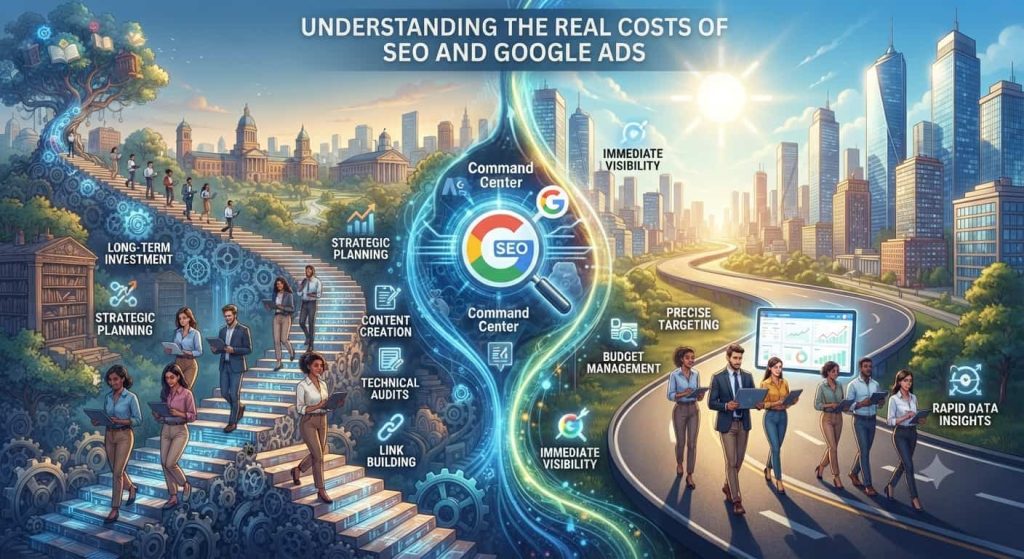
One of the biggest questions businesses face when comparing SEO or Google Ads is understanding how much each strategy actually costs. Although both require an investment their pricing models are completely different.
Let’s break down the real expenses behind each approach.
The Real Cost of SEO
Unlike paid advertising SEO does not involve paying Google directly for traffic. Instead your investment goes toward improving your website and increasing its long term visibility.
The primary costs of SEO typically include the following.
Technical SEO and Website Optimization
A successful SEO strategy begins with a technically sound website. This includes improving page speed optimizing site architecture enhancing user experience fixing crawl errors and ensuring search engines can properly index your content.
Content Creation
High quality content is one of the largest ongoing SEO investments. Businesses often hire experienced writers editors and SEO specialists to produce comprehensive guides blog articles landing pages and product content that answer users’ search intent.
Off Page SEO and Digital PR
Building authority requires earning high quality backlinks and increasing your brand’s online presence. This may involve digital PR campaigns guest publishing industry partnerships and outreach to reputable websites that strengthen your domain authority.
SEO Expertise and Strategy
Whether you work with an in house specialist or an SEO agency you are investing in keyword research competitor analysis technical audits content planning reporting and continuous optimization. SEO is an ongoing process that requires consistent attention and strategic direction.
While SEO requires a meaningful investment the money is spent building a digital asset that continues generating traffic and leads long after the initial work is completed. Instead of renting visibility you are increasing the long term value of your website.
The Real Cost of Google Ads
Google Ads follows an entirely different pricing model. Rather than investing in long term assets you pay directly for immediate visibility in Google’s search results.
Several factors determine the overall cost of a campaign.
Cost Per Click (CPC)
The primary expense in Google Ads is Cost Per Click or CPC. Every time someone clicks your advertisement you pay a fee. Highly competitive keywords often command significantly higher CPCs than niche or low competition search terms because multiple advertisers are bidding for the same audience.
Quality Score
Google evaluates every advertisement using a metric called Quality Score. This score is based on the relevance of your keywords the quality of your ad copy expected click through rate and the overall experience provided by your landing page.
A higher Quality Score can reduce your cost per click while improving your ad position. This is why landing page optimization plays such an important role in successful Google Ads campaigns.
Daily Budget
Google Ads allows you to define a daily advertising budget giving you complete control over your spending. Once your daily limit is reached your ads stop appearing until the next billing cycle making it easier to manage advertising costs.
In addition to your advertising budget many businesses also choose to work with Google Ads specialists or agencies to manage bidding strategies optimize campaigns improve Quality Scores and maximize return on investment. While this adds to the overall cost professional campaign management often results in better performance and more efficient use of advertising spend.
Real World Strategies That Deliver Results

After years of helping businesses grow through digital marketing we have learned one important lesson. The most successful companies do not limit themselves to either SEO or Google Ads. Instead they combine both channels into a unified strategy that delivers immediate wins while building sustainable long term growth.
Rather than viewing SEO vs Google Ads as a competition smart marketers use each channel where it performs best.
The Winning Formula: Combining SEO and Google Ads
When SEO and Google Ads work together they create a marketing system that is far more effective than relying on either strategy alone.
Own More Space on Google’s First Page
Imagine a potential customer searching for a keyword related to your business.
At the top of the search results they see your Google Ads campaign. A few positions below they also find your website ranking organically through SEO.
This dual visibility strengthens your brand presence increases credibility and significantly improves the likelihood that users will choose your business over competitors. Occupying multiple positions on the same search results page builds trust before a visitor even reaches your website.
Use Google Ads Data to Improve Your SEO Strategy
SEO requires time and long term investment. The last thing you want is to spend months targeting keywords that generate traffic but no revenue.
Google Ads provides valuable performance data almost immediately. By running a short term advertising campaign you can quickly identify which keywords produce the highest conversion rates and strongest purchase intent.
Those insights allow you to prioritize the most profitable keywords in your SEO strategy making your long term investment significantly more effective.
Improve Google Ads Performance with SEO Best Practices
SEO is not only about rankings. It also improves the overall quality of your website.
A fast website relevant content clear site structure and an optimized user experience all contribute to better landing pages. These improvements increase your Quality Score in Google Ads which can lower your Cost Per Click (CPC) while improving ad placement and campaign performance.
A Real Example of an SEO and Google Ads Sales Funnel
Let’s look at a practical example.
Imagine your company sells cloud based accounting software.
Your marketing strategy could look like this.
Top of the Funnel: Build Awareness with SEO
Create educational content that answers questions your audience is already searching for.
Examples include:
- How to Manage Business Finances More Efficiently
- Traditional Accounting vs Cloud Accounting
- Benefits of Cloud Accounting for Small Businesses
These articles attract qualified organic visitors who are researching solutions and beginning their buying journey.
Middle of the Funnel: Capture High Intent Buyers with Google Ads
Users searching for phrases such as Buy Cloud Accounting Software or Best Accounting Software for Retail Businesses already have strong purchase intent.
Google Ads allows you to place your product directly in front of these high value prospects and drive them to a dedicated landing page designed to generate conversions.
Bottom of the Funnel: Convert Returning Visitors
Not every visitor buys during their first visit.
Using Google Ads remarketing campaigns you can reconnect with previous website visitors who discovered your business through SEO but did not convert.
Offering a free trial product demonstration or limited time promotion encourages these qualified prospects to return and complete their purchase.
Relying Entirely on Paid Advertising
Many businesses experience early success with Google Ads and eventually dedicate their entire marketing budget to paid campaigns while ignoring SEO completely.
This approach creates dependency.
As advertising costs increase competition becomes stronger or market conditions change customer acquisition becomes more expensive. Without a steady source of organic traffic businesses often struggle to maintain profitability because every new customer requires continuous advertising spend.
Ignoring SEO Completely
Some business owners believe SEO takes too long and decide not to invest in it at all.
The reality is that most buying journeys begin with a Google search. Businesses that ignore organic search give competitors the opportunity to build authority capture valuable rankings and establish trust with potential customers.
Once competitors dominate high value organic keywords replacing them becomes significantly more difficult and expensive.
Poor Landing Pages Waste Expensive Traffic
One of the biggest mistakes in digital marketing is investing in Google Ads without optimizing the landing page.
Every paid click has a cost. If visitors arrive on a slow confusing or poorly designed page with no clear call to action they are likely to leave immediately.
High bounce rates low conversion rates and wasted advertising budgets are often caused not by poor ads but by poor landing page experiences.
An effective landing page should load quickly communicate value immediately provide a seamless mobile experience and guide visitors toward a single clear action.
Conclusion: Which Strategy Should You Choose?
The debate between SEO and Google Ads does not have a universal winner.
The businesses that achieve the greatest success understand when to use each channel and how to combine them effectively.
If your priority is immediate traffic rapid lead generation and fast sales Google Ads is the right solution.
If your goal is building long term authority reducing customer acquisition costs and creating a sustainable source of qualified traffic SEO offers unmatched long term value.
For most businesses the smartest strategy is not choosing one over the other. It is creating a balanced marketing system where SEO builds lasting authority while Google Ads generates immediate opportunities. Together they create a powerful engine for consistent business growth.
Need Help Choosing the Right Strategy?
Selecting the right mix of SEO and Google Ads requires more than guesswork.
It involves analyzing your industry understanding your competitors evaluating keyword opportunities reviewing your website and aligning every marketing investment with your business goals.
Our digital marketing team helps businesses build customized growth strategies based on real data not assumptions.
Request a Free Marketing Audit
Let us evaluate your website identify growth opportunities and recommend the most effective digital marketing strategy for your business.
Request a Marketing Audit
Talk to Our Digital Marketing Experts
Get personalized guidance from experienced specialists and discover how to maximize your marketing budget and increase your return on investment.
Get a Free Consultation
Frequently Asked Questions
Which is better for a small business: SEO or Google Ads?
The best option depends on your budget and business goals. If you have limited funds and can invest time SEO offers sustainable long term growth. If you need immediate traffic leads and sales Google Ads is the faster solution.
Is SEO cheaper than Google Ads?
In the long run yes.
SEO requires an upfront investment in content technical optimization and ongoing improvements but organic traffic continues to grow without paying for every visitor. Google Ads delivers immediate results but requires continuous advertising spend to maintain traffic.
How long does SEO take to produce results?
Most businesses begin seeing measurable SEO improvements within three to six months. Highly competitive industries often require nine to twelve months or longer to achieve top rankings. The timeline depends on factors such as competition website authority content quality and technical optimization.